For the 5-string banjo
5-String Banjo Chords
Every shape worked out on the neck. The short string included.
Chord boxes for open G, double C, sawmill and D tuning, with the fingers to use and whether the 5th string belongs. Then pick: seventeen rolls and clawhammer patterns play over any chord. Nothing is copied from a chart: change the tuning and every shape is solved again.
The whole app, free in your browser, no ads and no account. It works offline after the first visit. Looking for one chord? See the banjo chord charts.
GOpen G · gDGBD
All shapes →DRAFTThe roll writes itself out as banjo tab: top line string 1, bottom line the 5th. Letters are fingers (T thumb, I index, M middle, N nail). Patterns are drawn from published teaching sources and are still being checked by ear.
The 5th string, worked out
The short string rings over everything you play, and charts mostly leave it off. Here is every common chord's first shape with its verdict: in the chord, a colour, or a rub against a note a semitone away that the shape actually plays. Tap one to hear it with the 5th string ringing.
in the chorda colourrubs
Capo on. The 5th goes too.
A capo can't reach the short string. Most players spike it or retune it to match; some leave it ringing where it was. Slide the capo and watch where the spike goes.
No capo: G
Hear the roll
Seventeen patterns: forward, backward, forward-reverse and alternating thumb rolls, Foggy Mountain, clawhammer’s bum-ditty and drop thumb, two-finger, vamp and the Seeger strum. Any of them loops over any chord, in any tuning, on a plucked banjo voice, and the thumb’s string follows the chord. Loop it over a key’s progressions (Cripple Creek, Little Maggie, the 12-bar blues) or build your own from the key’s chords, and it moves with you to any key. Change the pattern, chord or tempo mid-loop and it changes on the next note.
The tunings players use
- Open GgDGBD
- Double CgCGCD
- SawmillgDGCD
- Df♯DF♯AD
- CgCGBD
- G minorgDGB♭D
Or your own five notes. The letters always show beside the name, because “open C” and “G modal” mean different tunings to different people.
Shapes a player reaches for
Every chord leads with the shape in the chord books, open G’s 2 0 1 2 for C, then the moveable F shape, D shape and barre up the neck, with the finger for every string. Seventy published shapes in five tunings are the app’s own test.
Chord finder
Tap the frets you’re holding, the 5th string too. It names the chord, offers the ones a note away, and lists the keys it belongs to.
A banjo tuner that hears the high g
It knows the 5th string is the high G, an octave above the 3rd, so it can’t pass the wrong one. Every tuning, A = 440 or your own. Sound is analysed on your phone and never recorded.
Keys and modes
Pick a key in major, mixolydian, dorian, minor, ten more, or the pentatonics and blues. See its chords as banjo shapes, which open strings ring in it, and hold a drone under it.
Built for your hands
Only shapes a real hand can stretch to make the list. Left-handed mirrors every box, the 5th string with it. Tap any box to hear it.
On the porch, offline
No account, no ads, no purchases. Open it once in your browser and it keeps working with no signal: at the jam, in the truck, at the festival campsite.
Print a chart A4 PDF
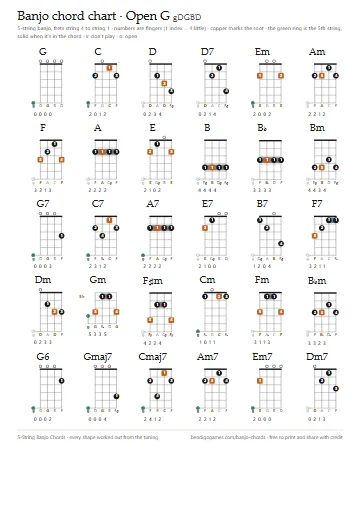 Open G
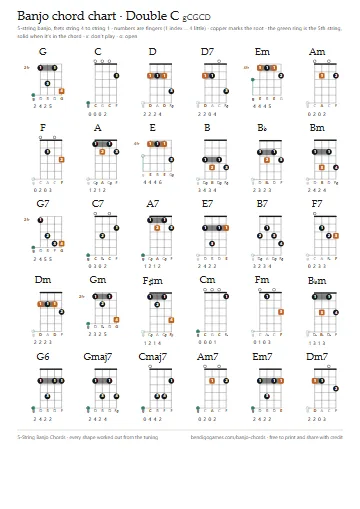 Double C
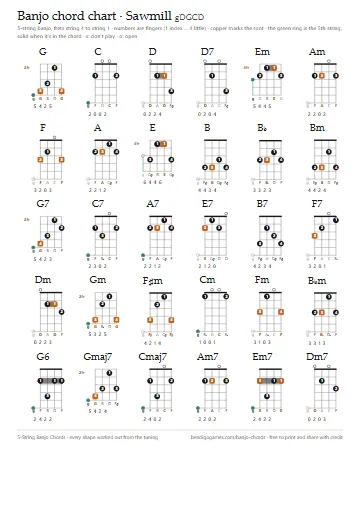 Sawmill
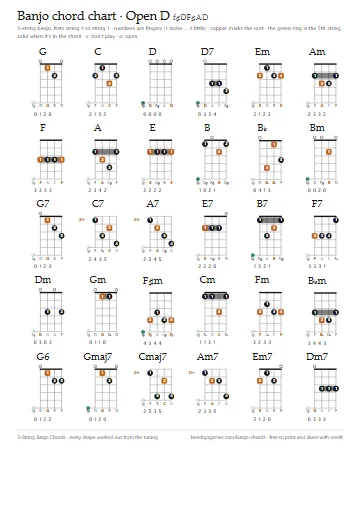 D tuning
The app itself
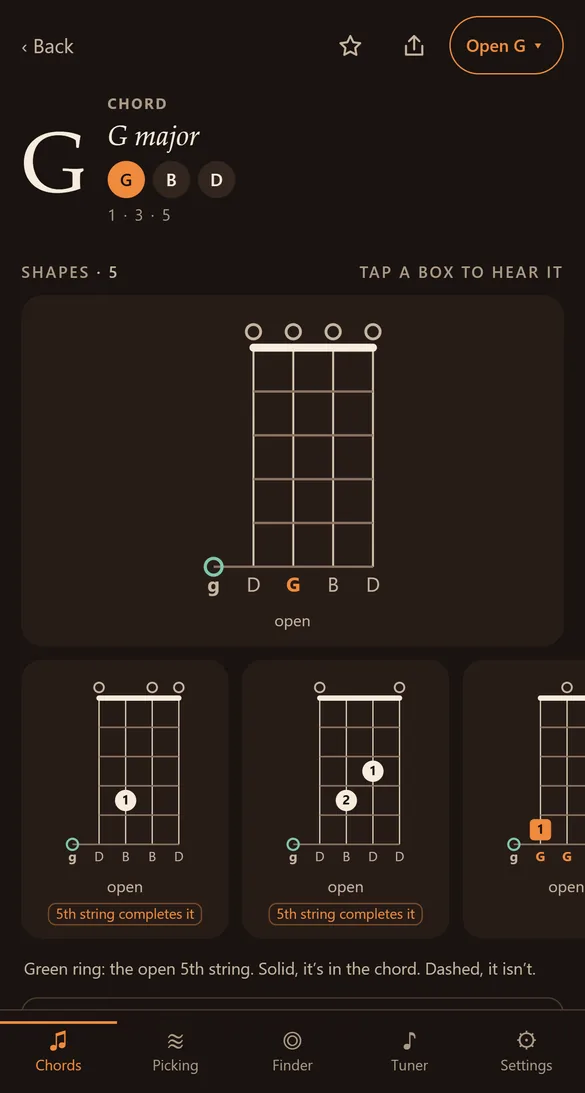
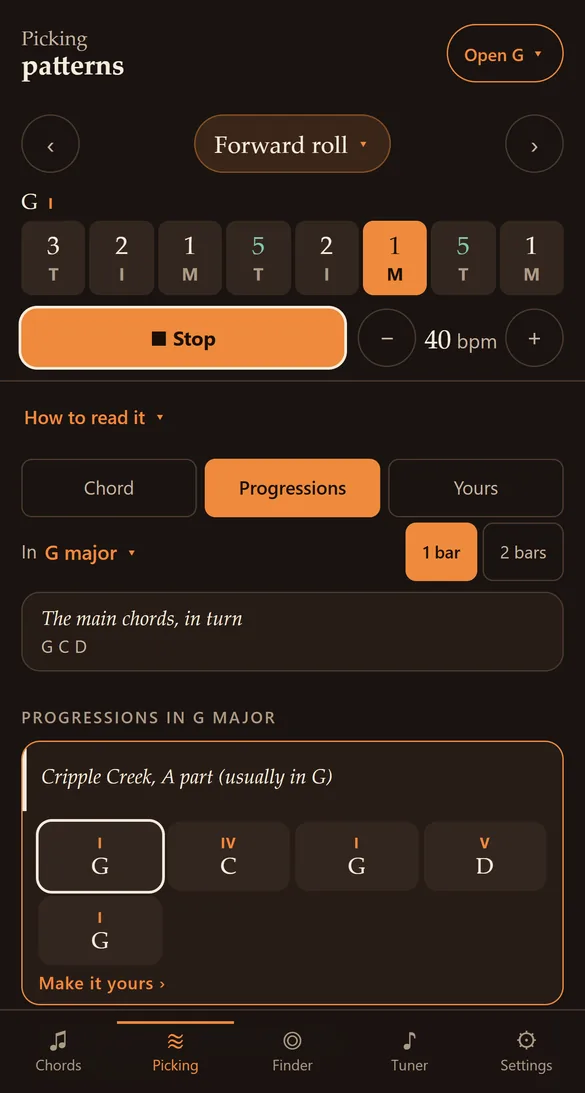
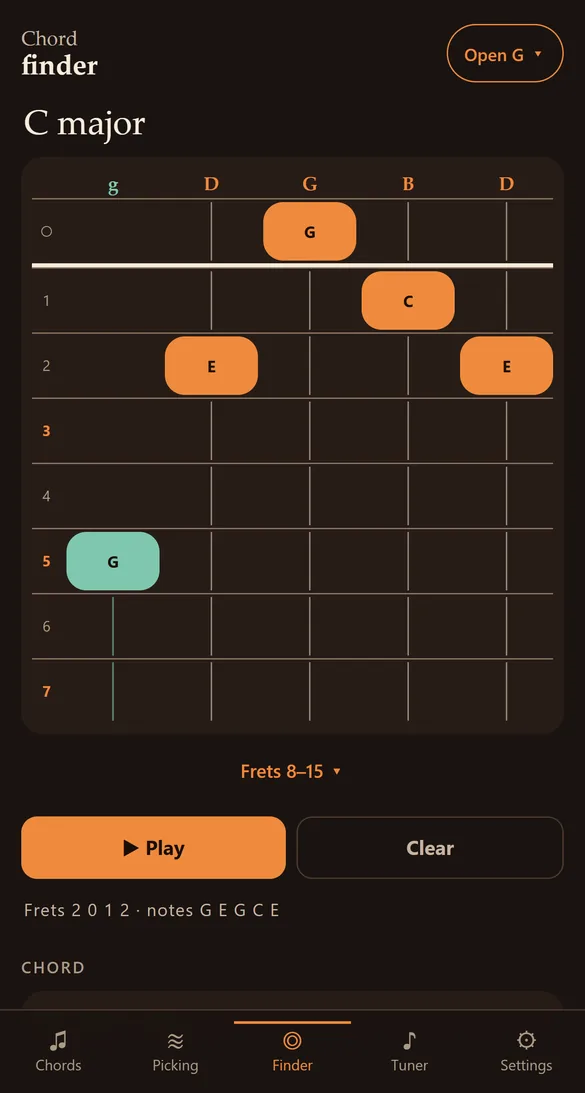
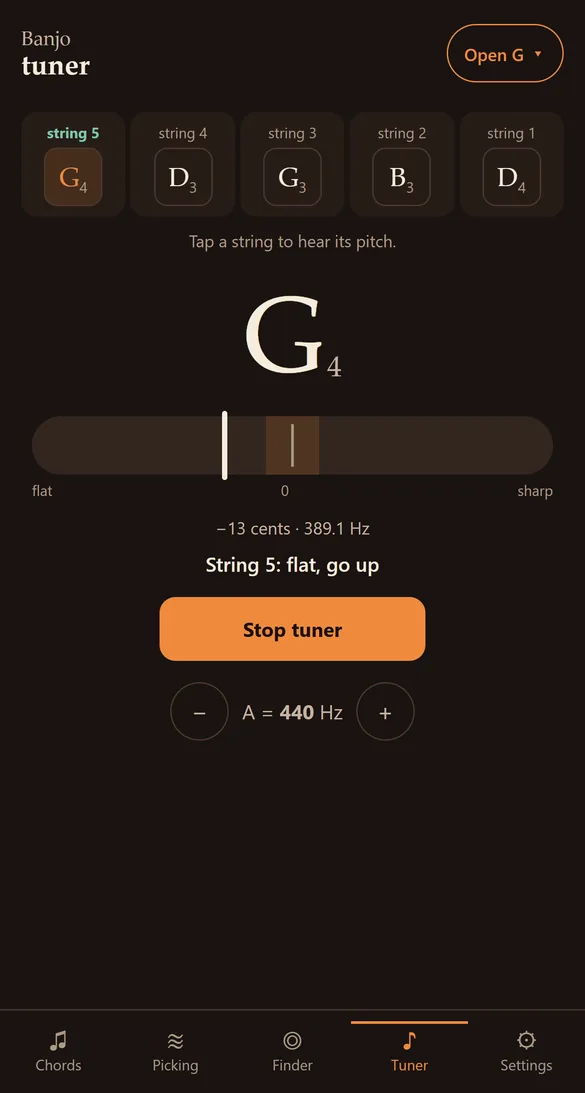
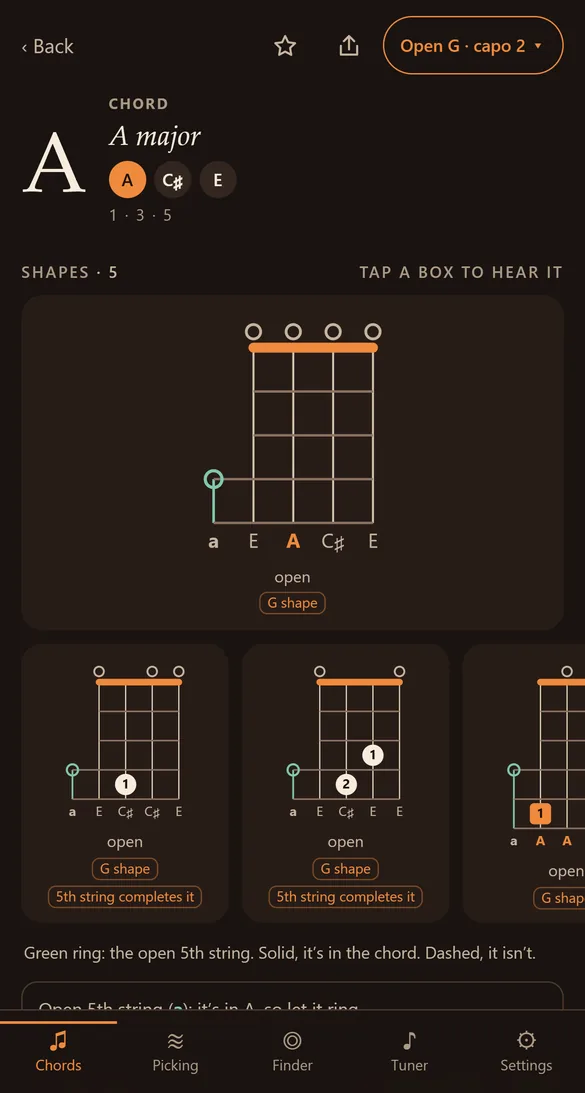
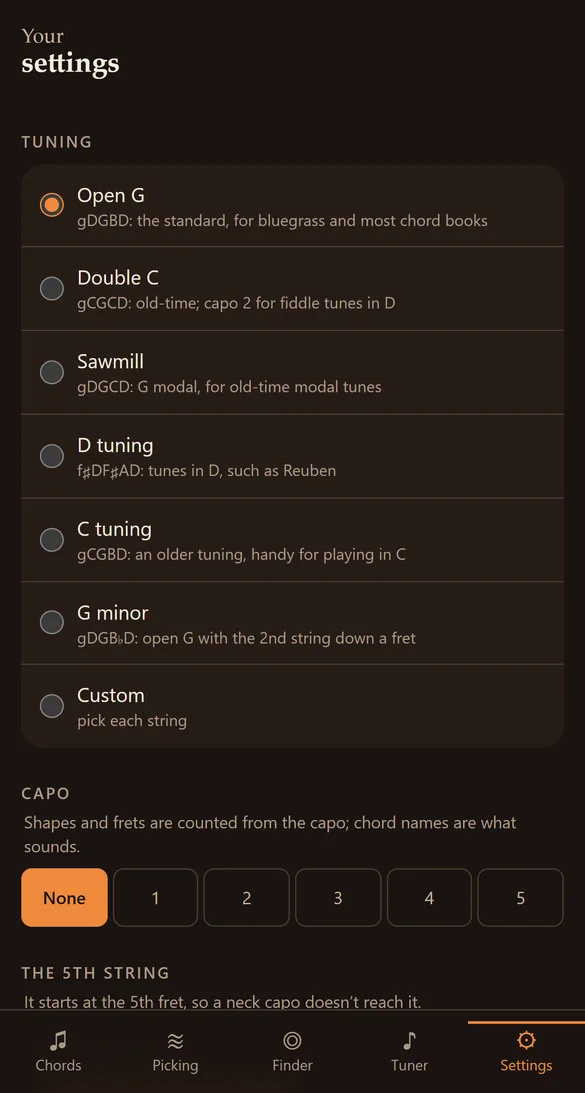
Every screen here is the app itself, captured from the web app.
Free in your browser, coming to iPhone. Works offline. No account, no ads, no purchases.