Scene book
Twenty rooms in the Walled City
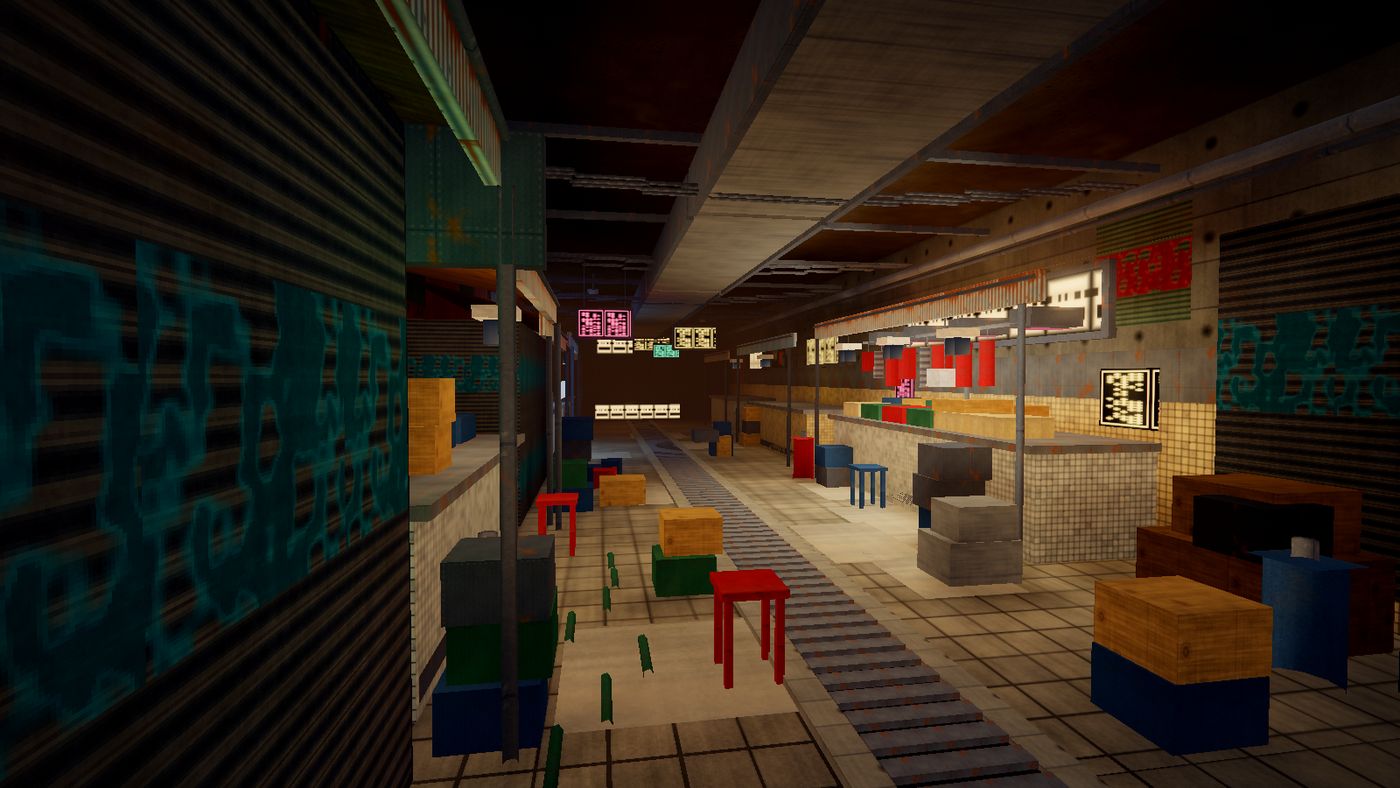
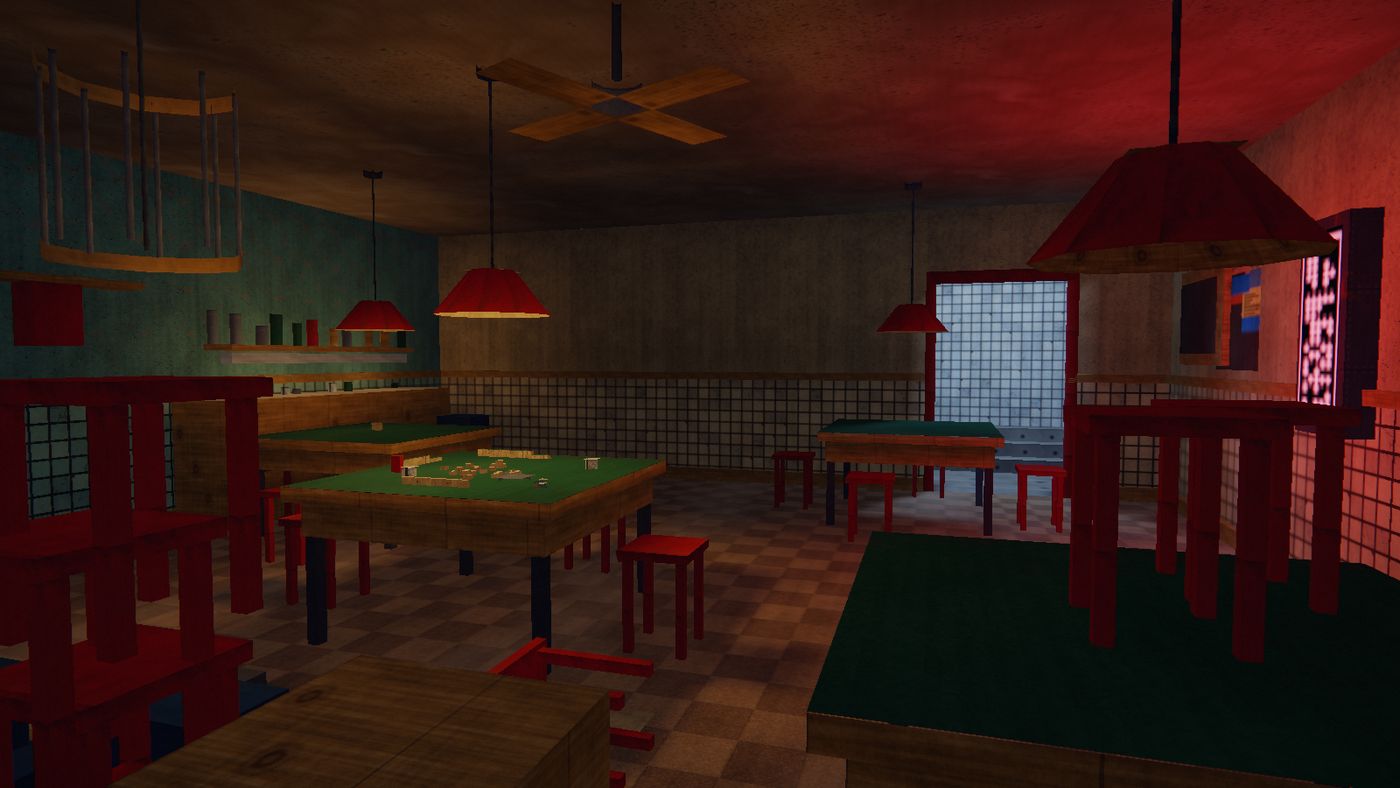
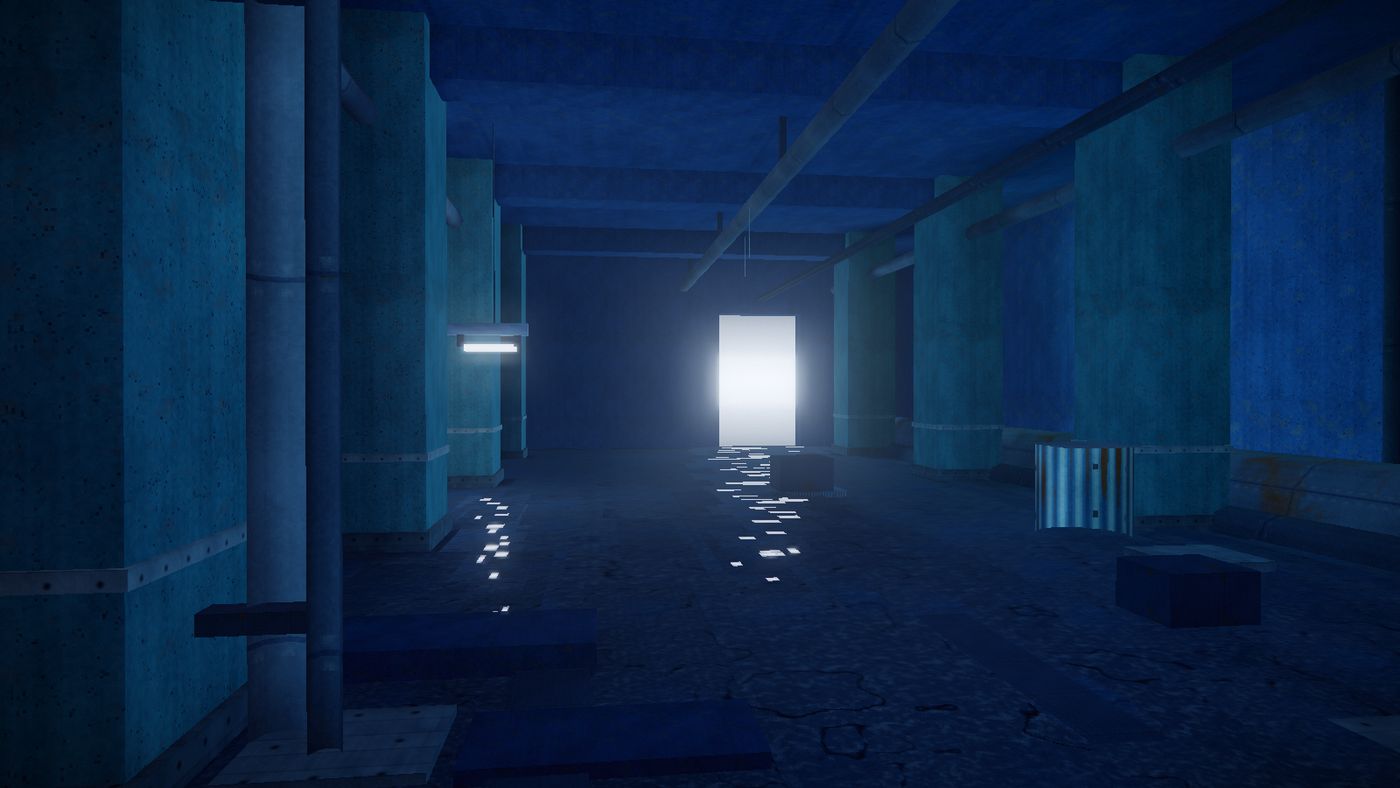
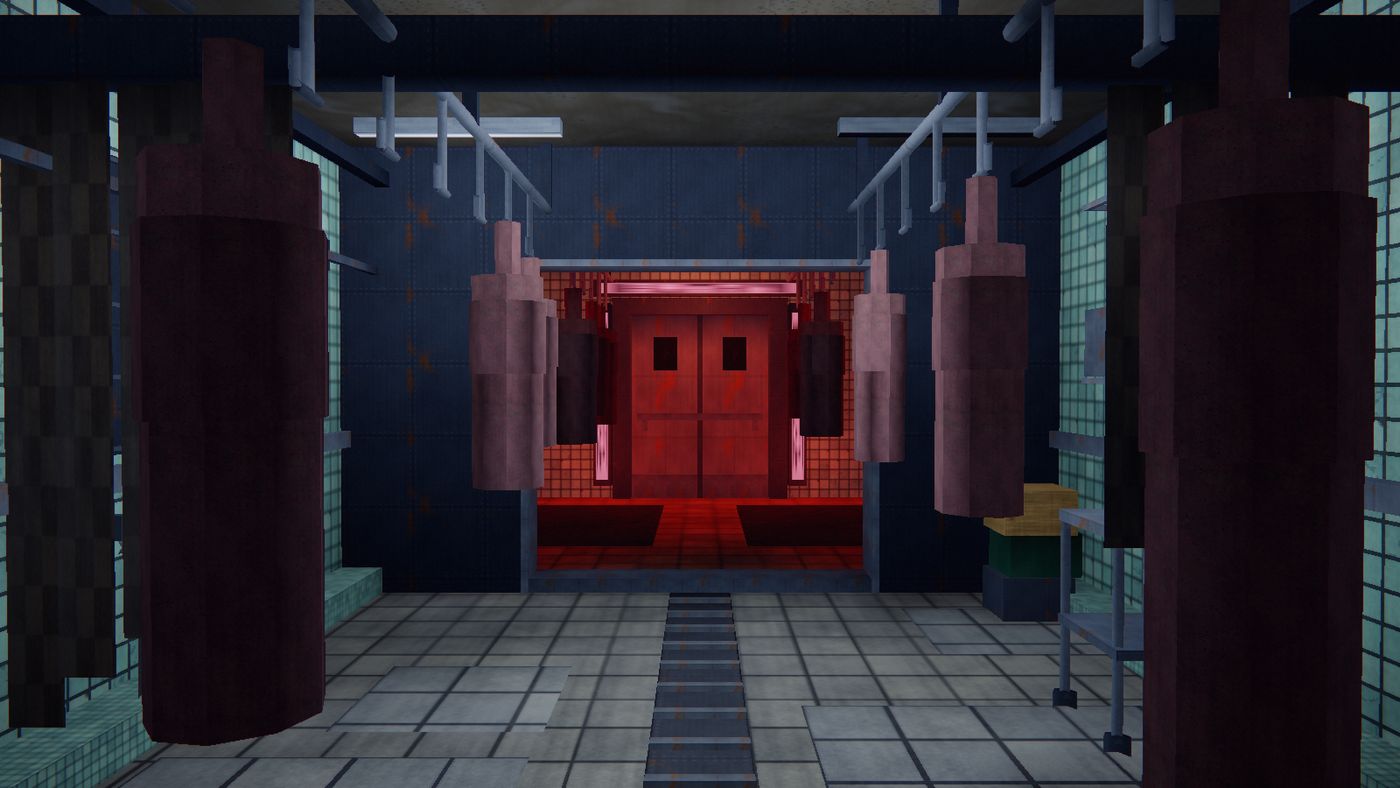
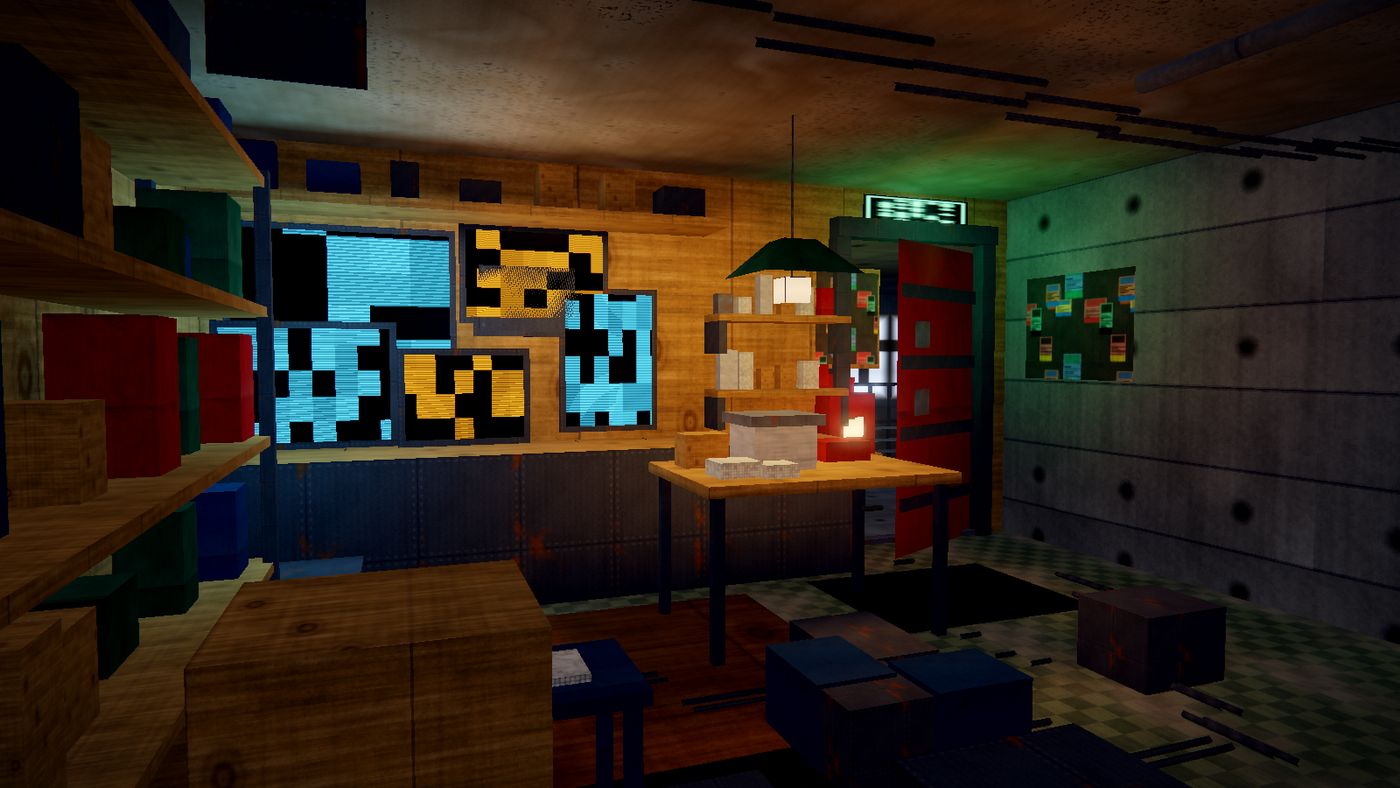
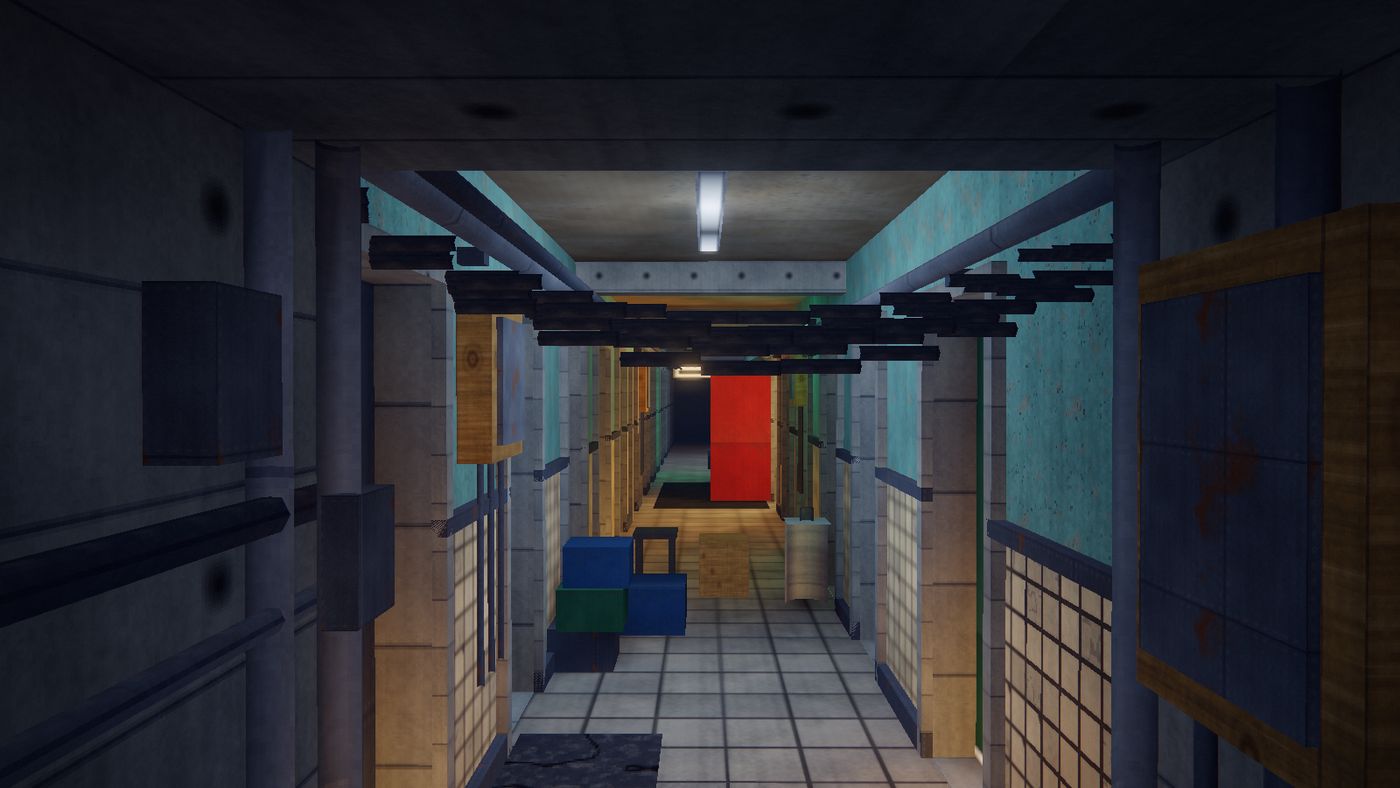
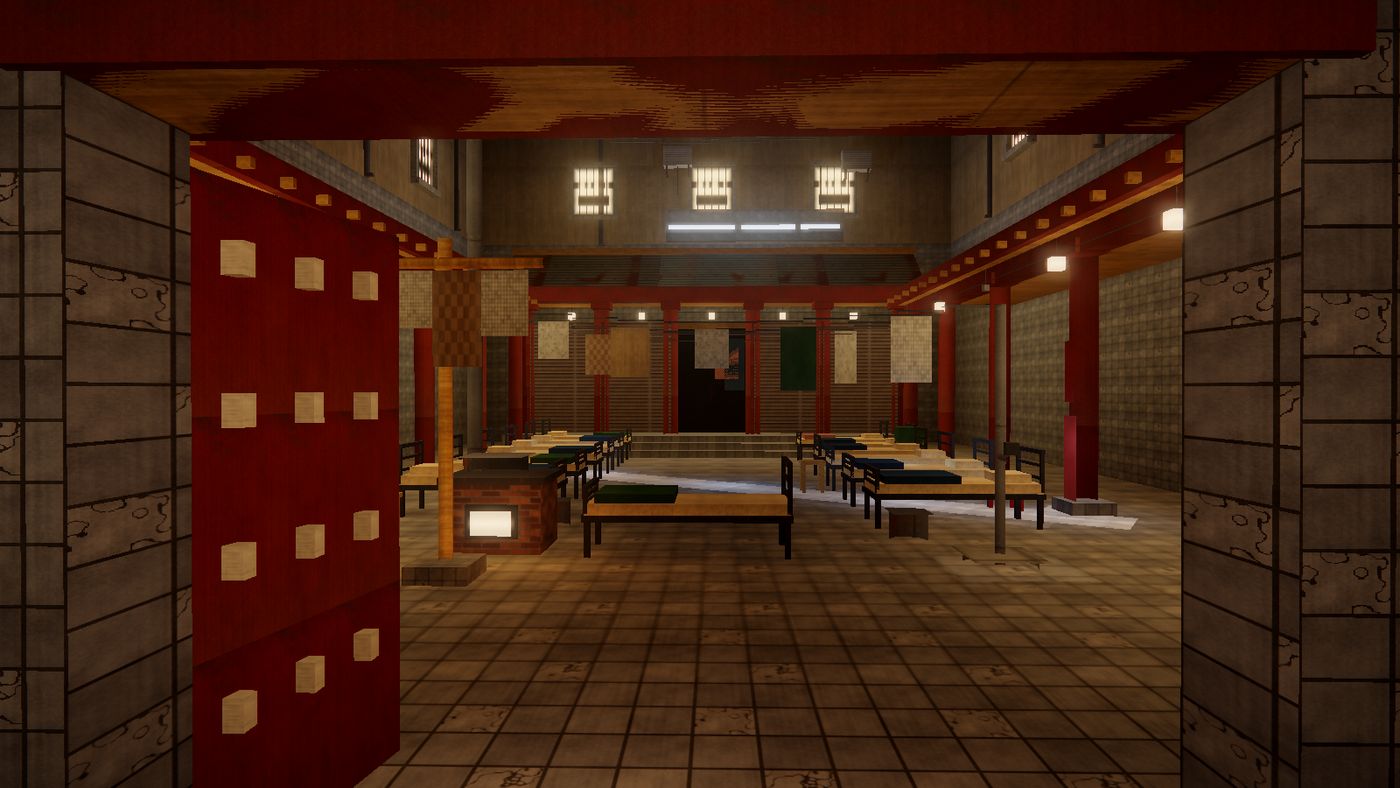
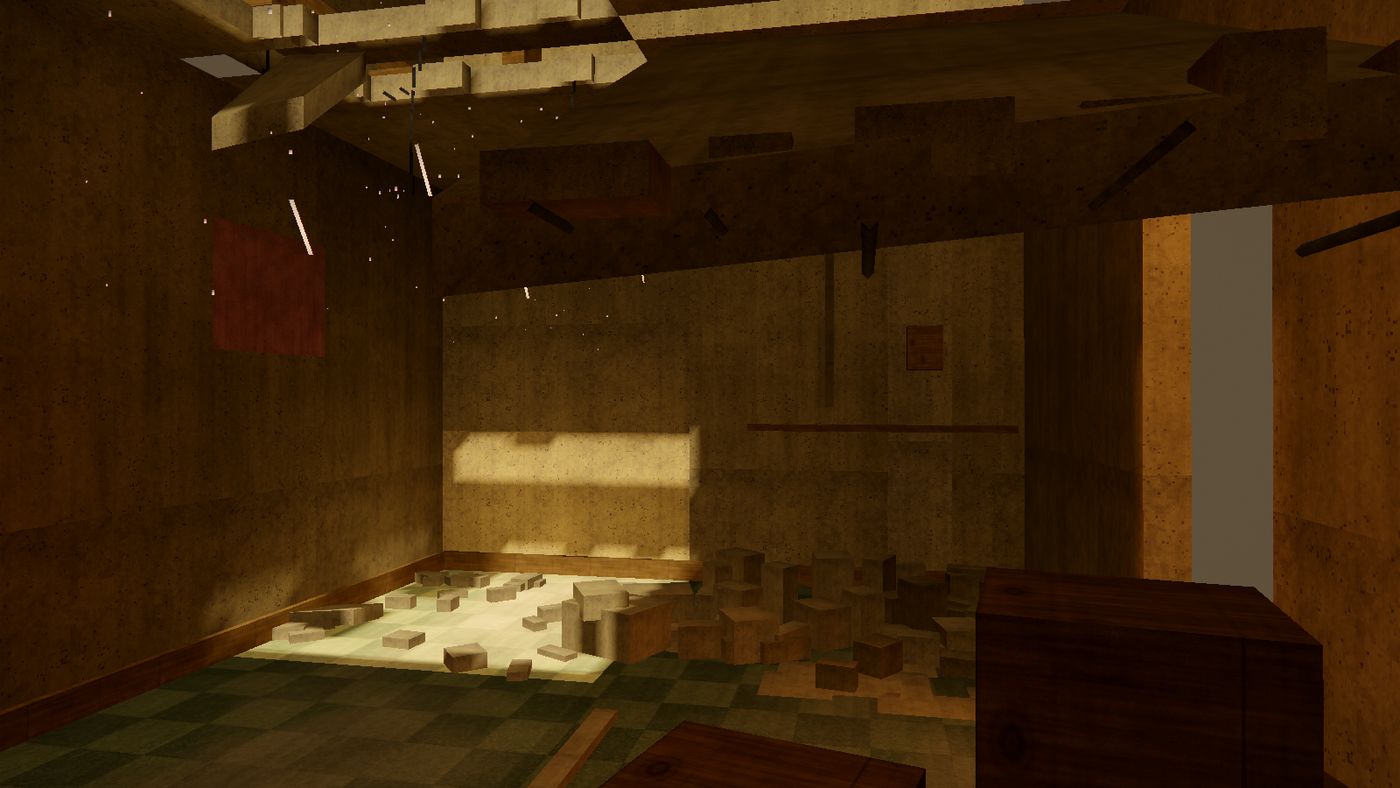
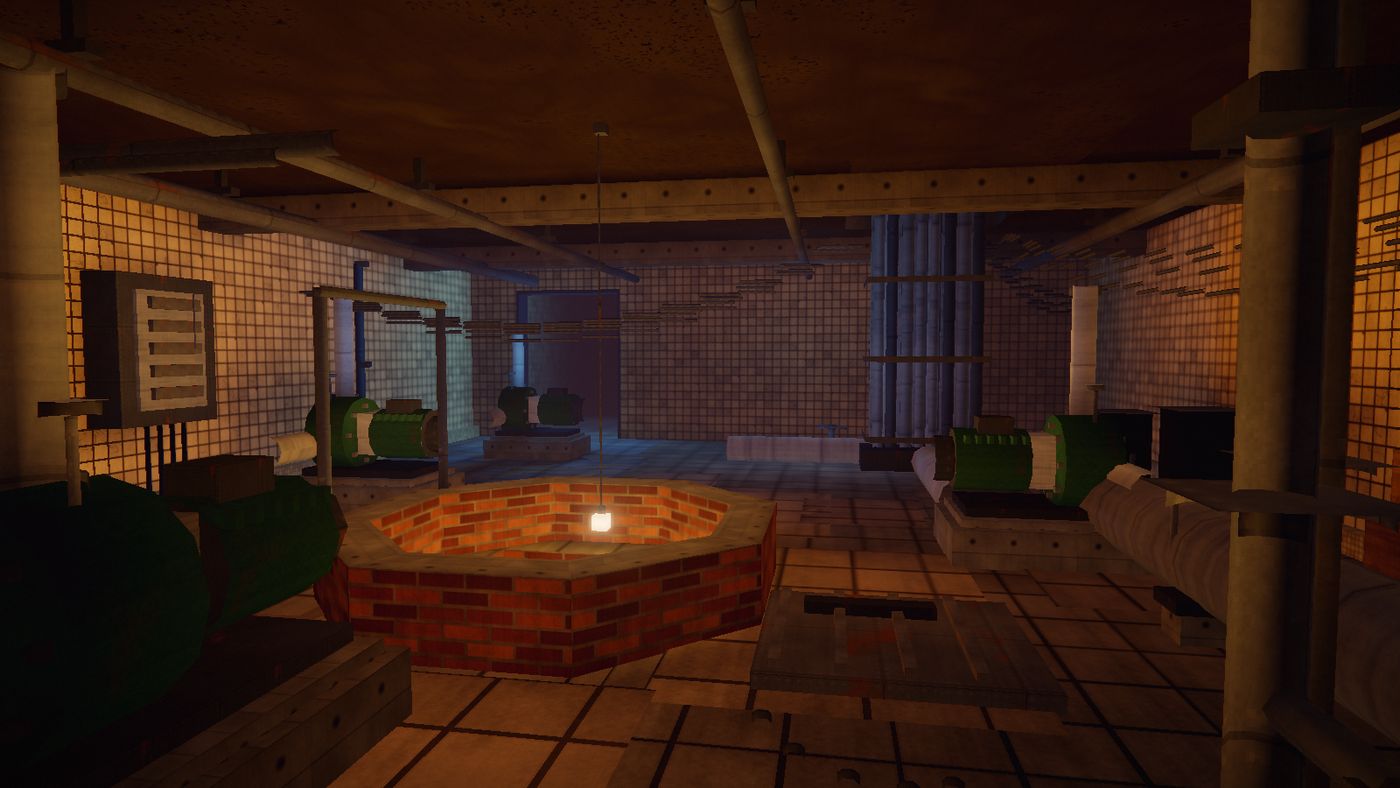
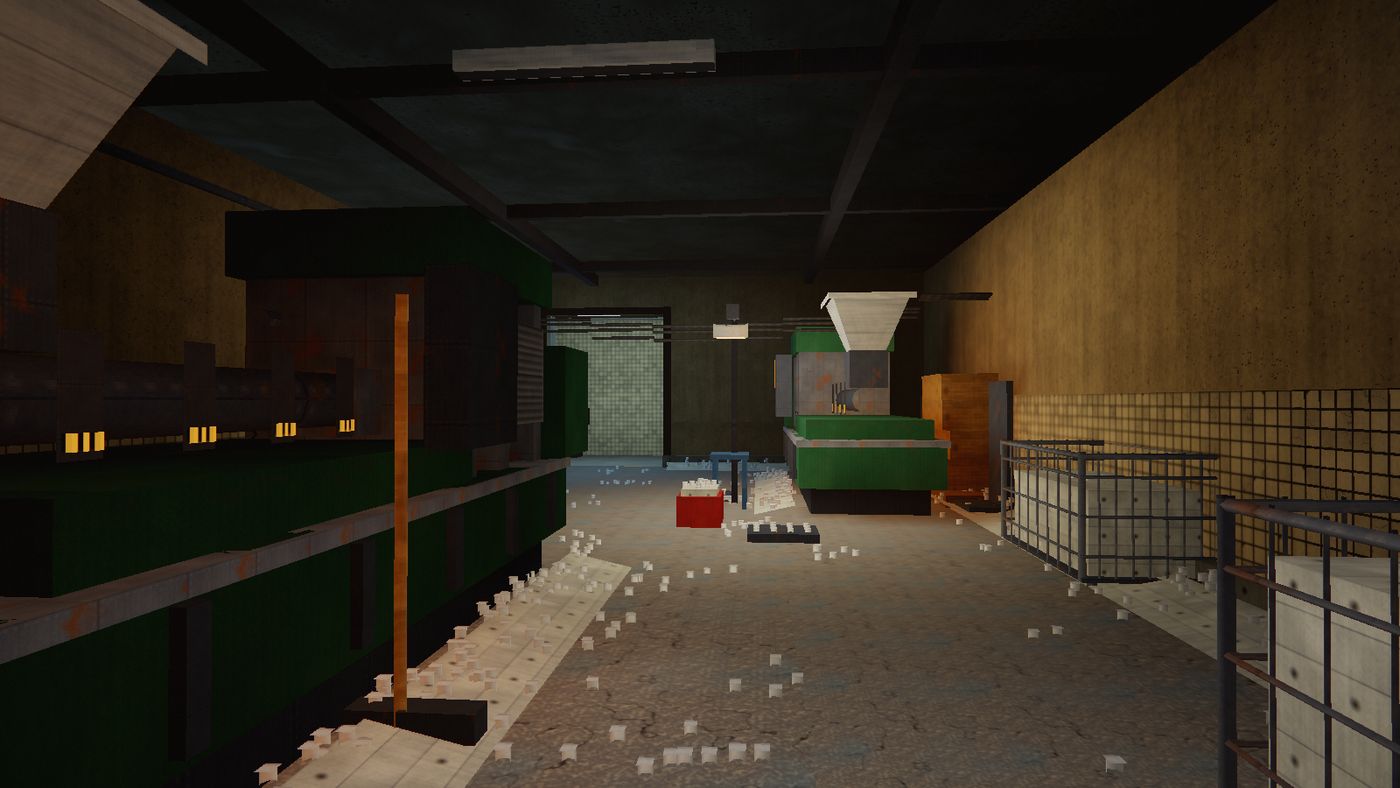
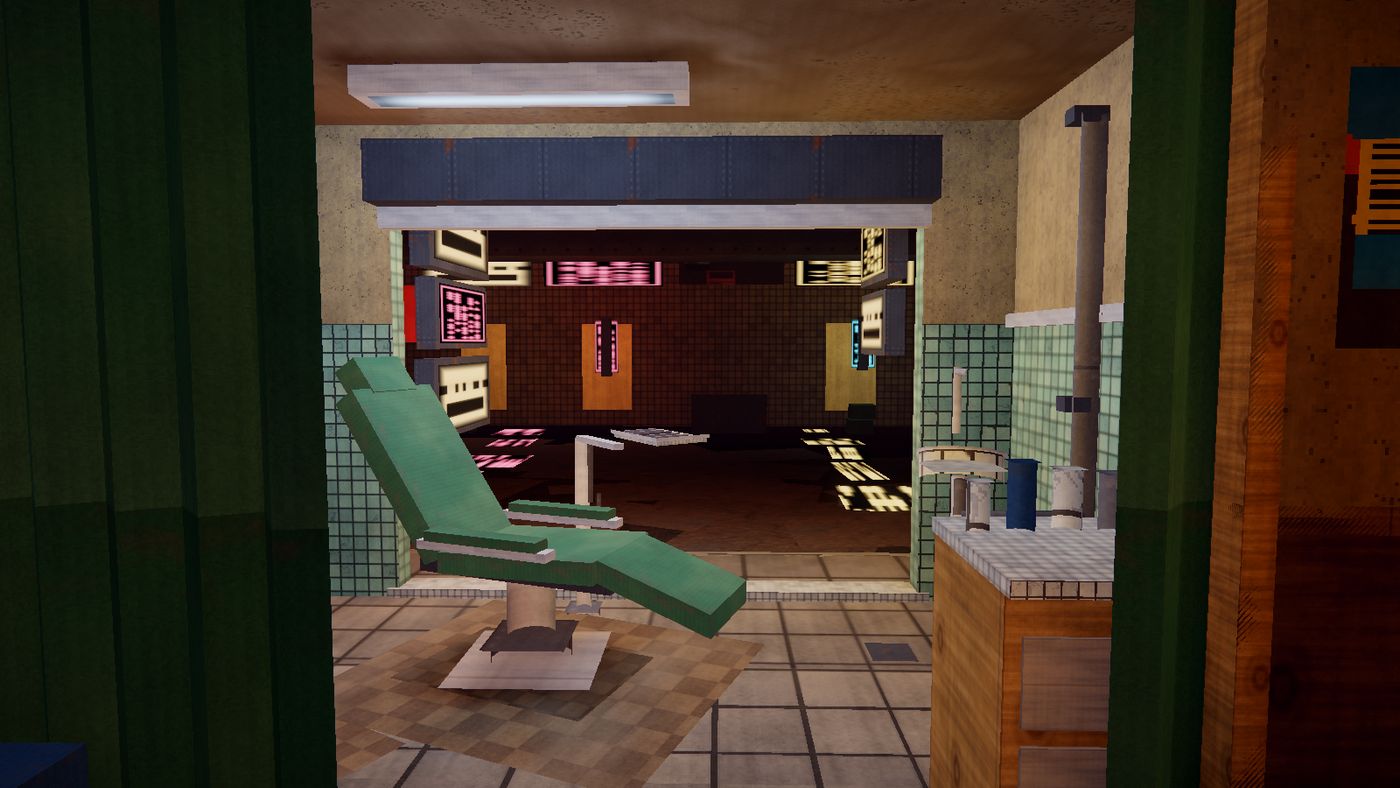
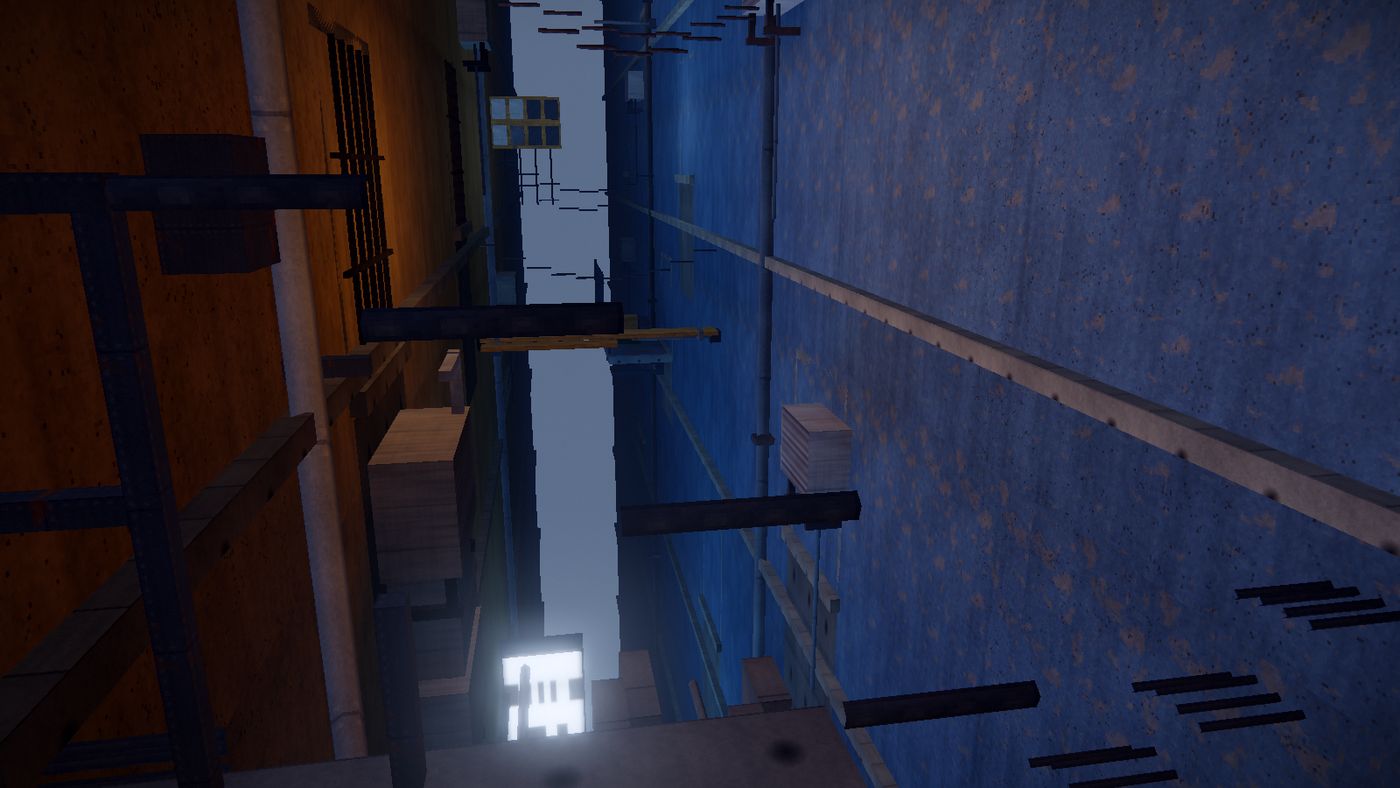
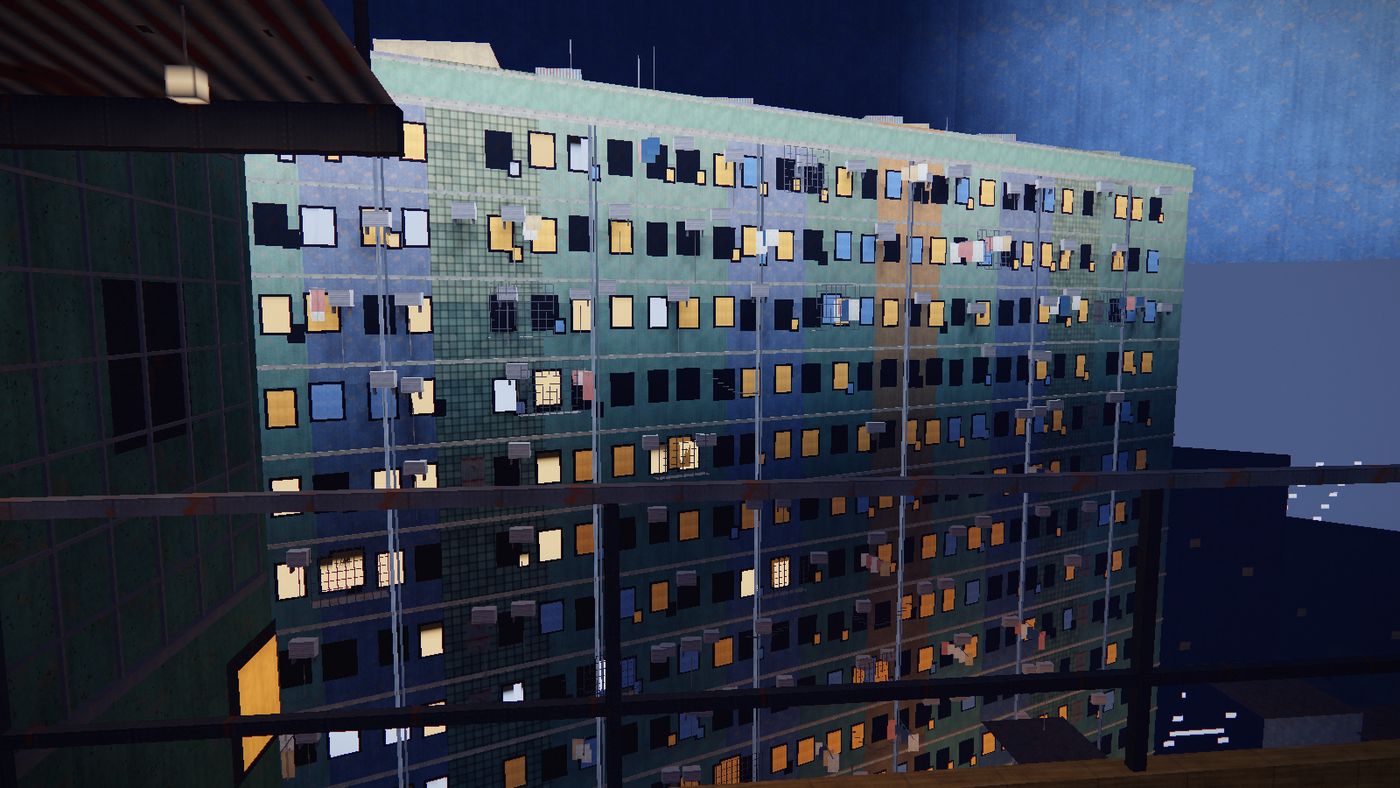
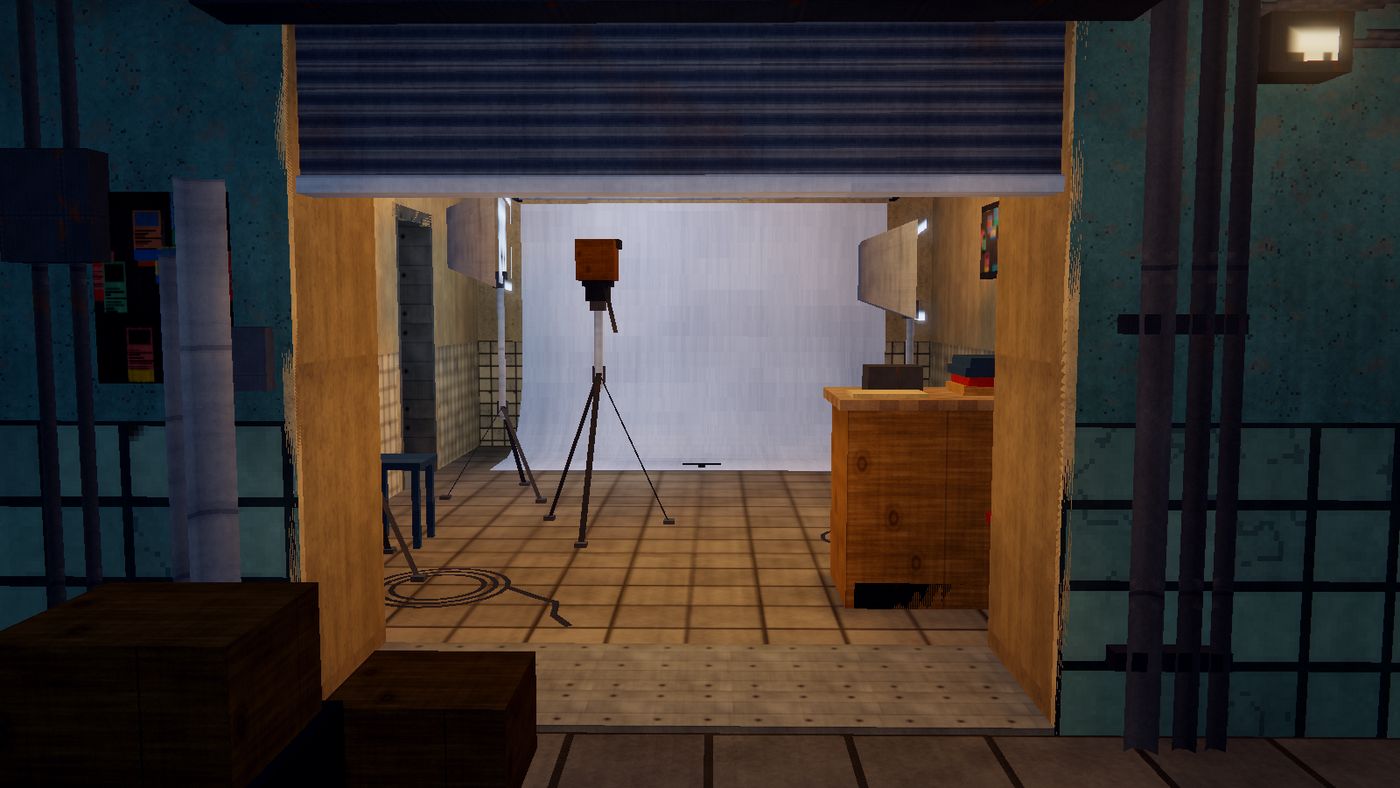
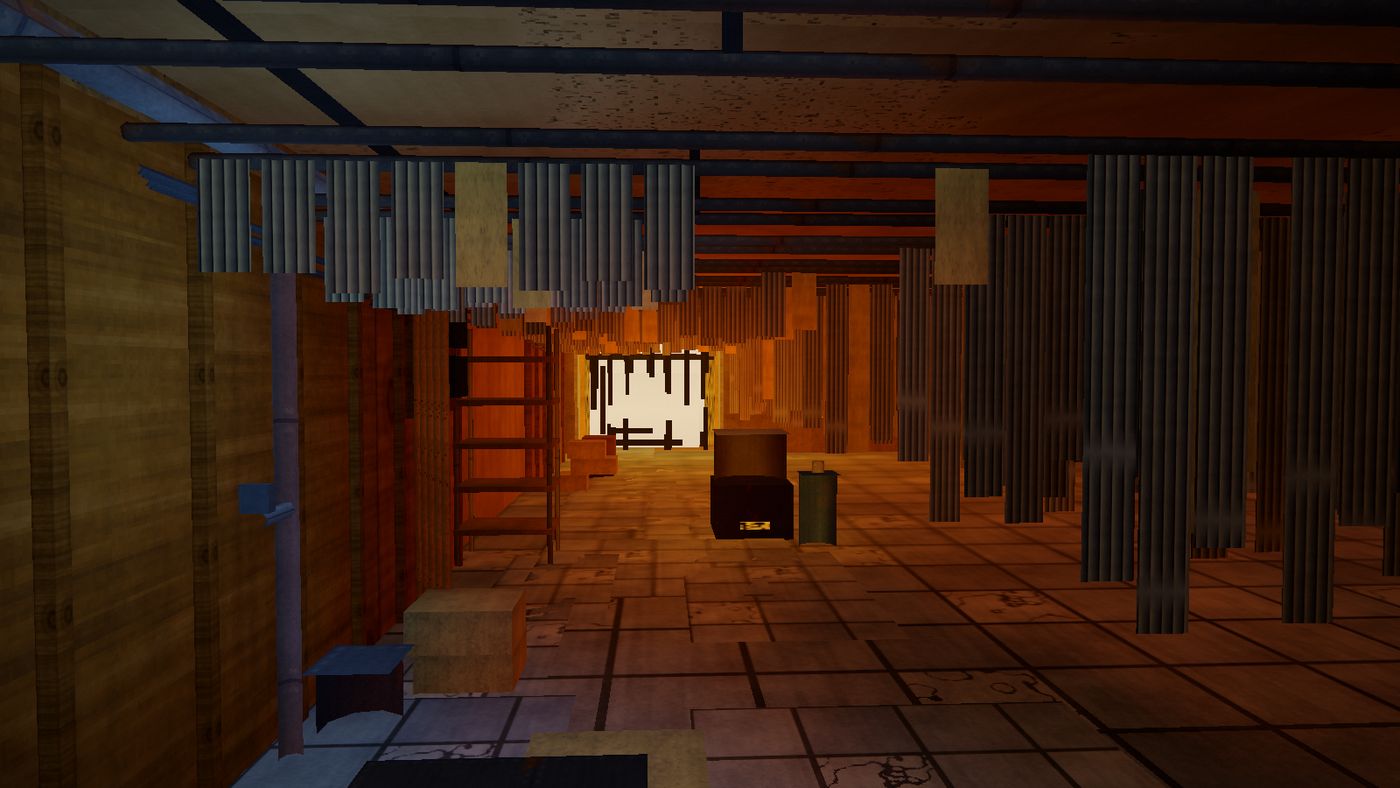
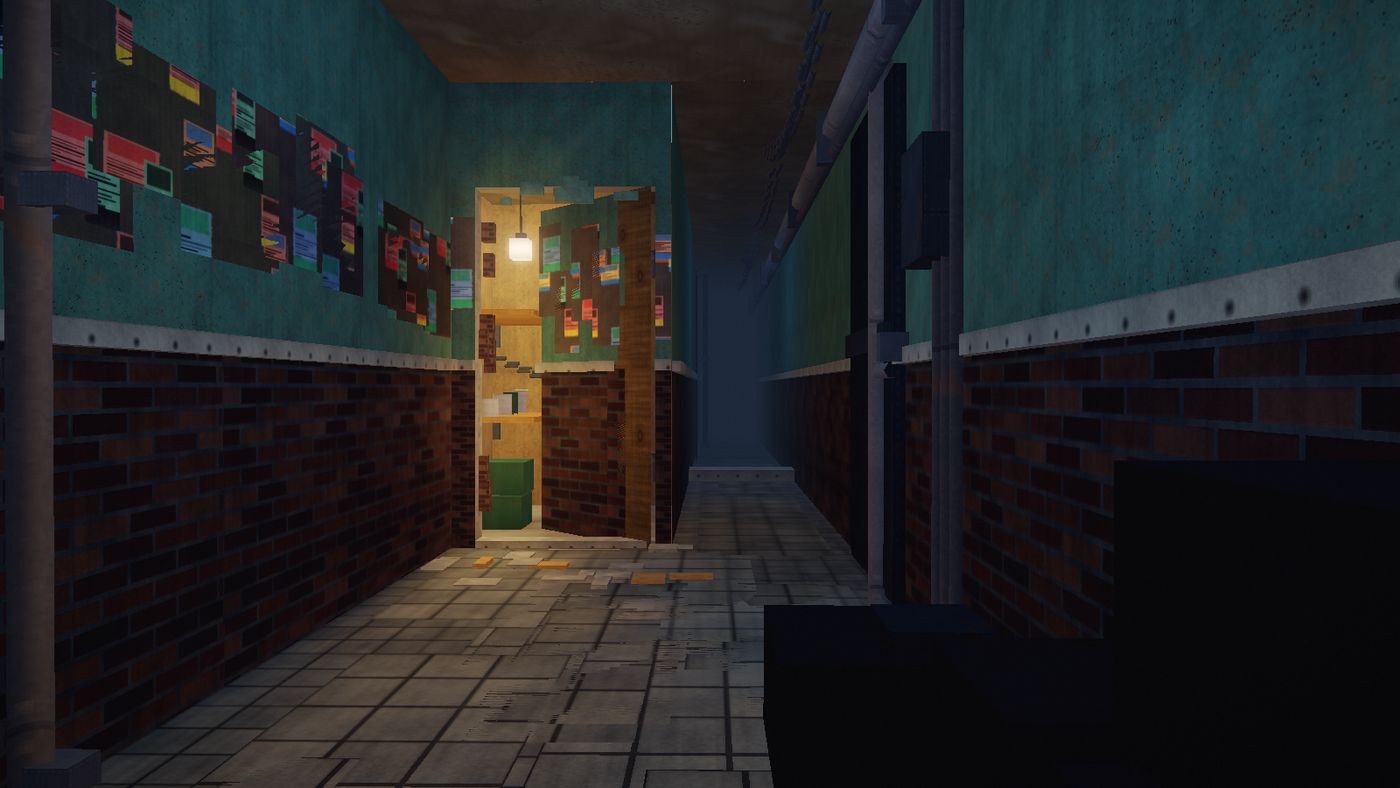
Every image below is drawn by the game's own renderer — same materials, same baked lighting, same post-processing, no offline render and no touched-up pixels. The numbers under each plate are measured from the build that produced it. All twenty together are 530,126 triangles and never more than 30 draw calls in a frame. Build time is geometry plus the shadow bake, with the textures already painted — every material in all ten scenes is generated once, on load, and then shared.
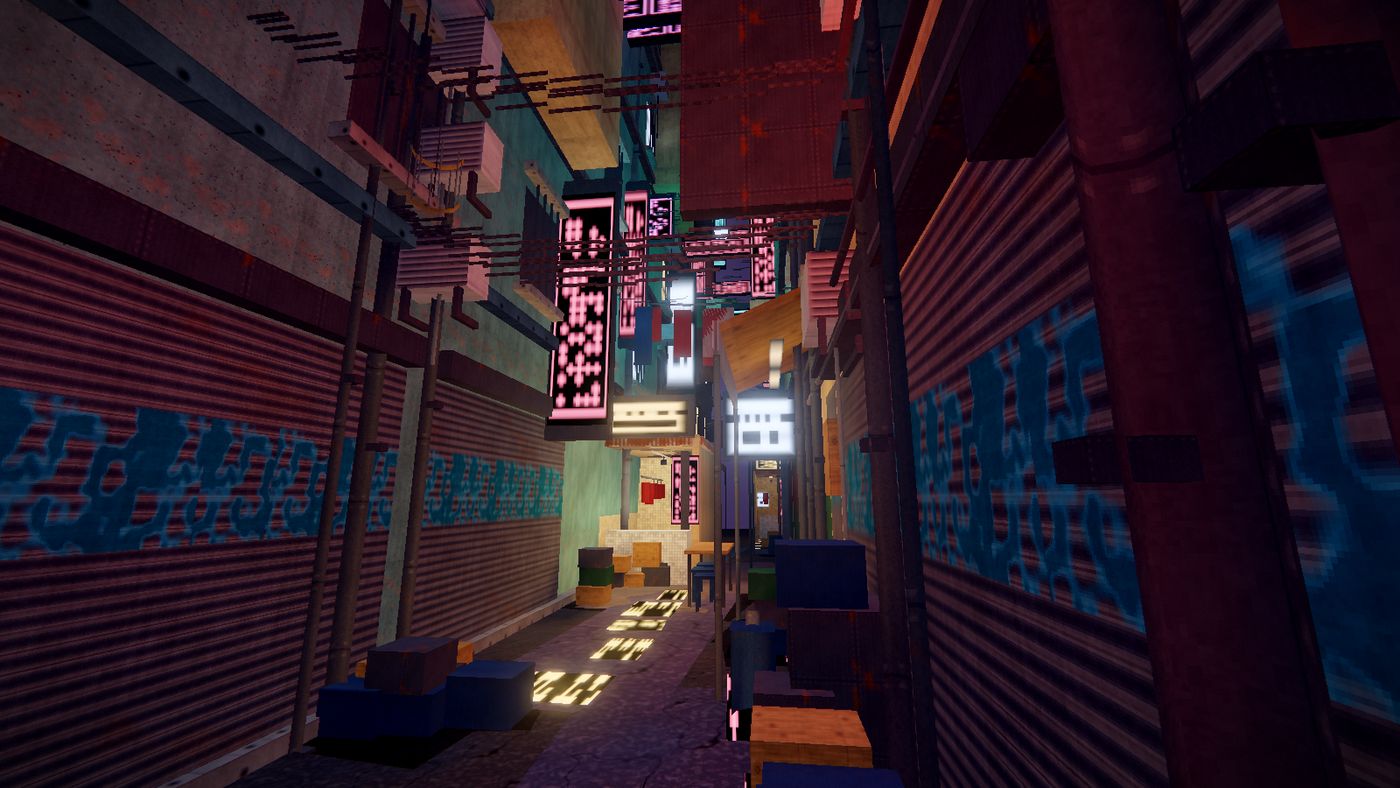
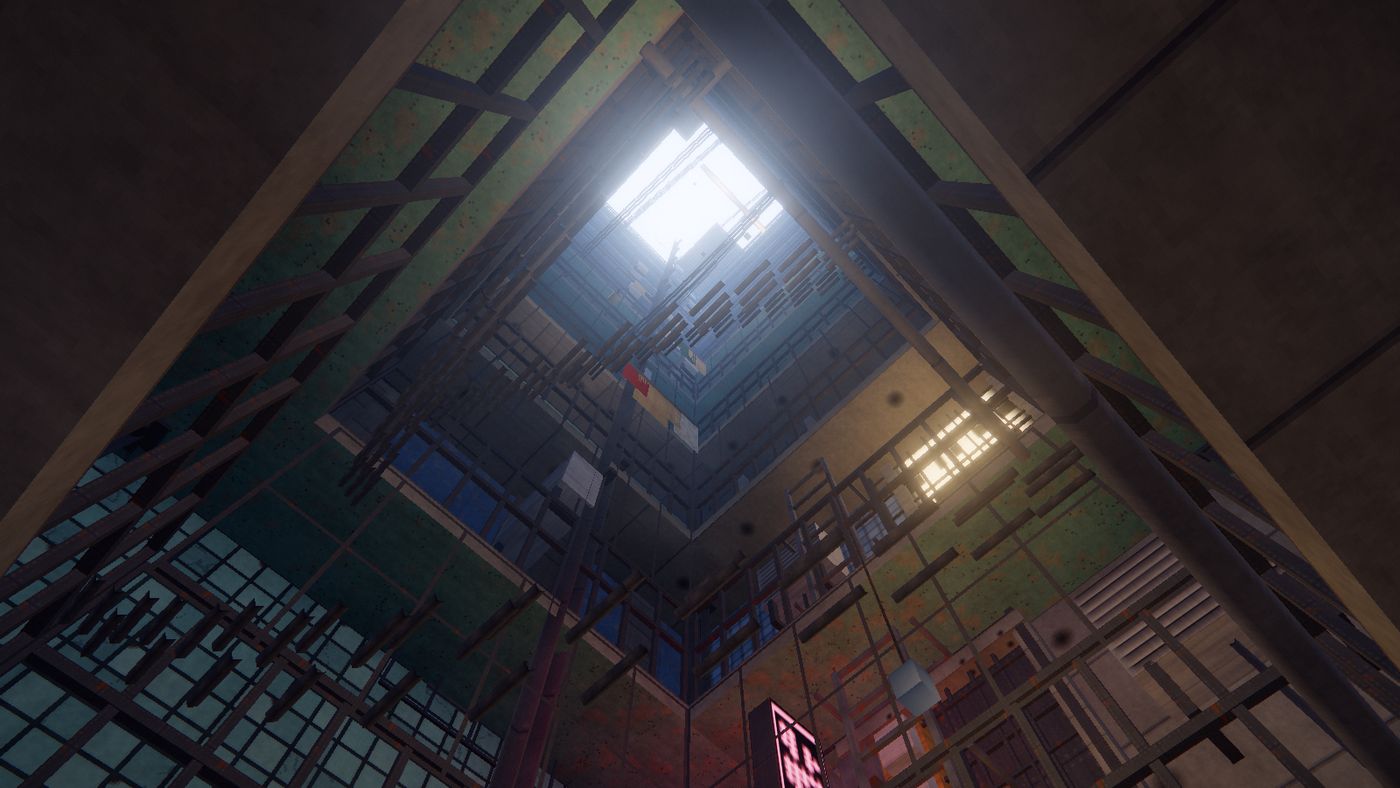
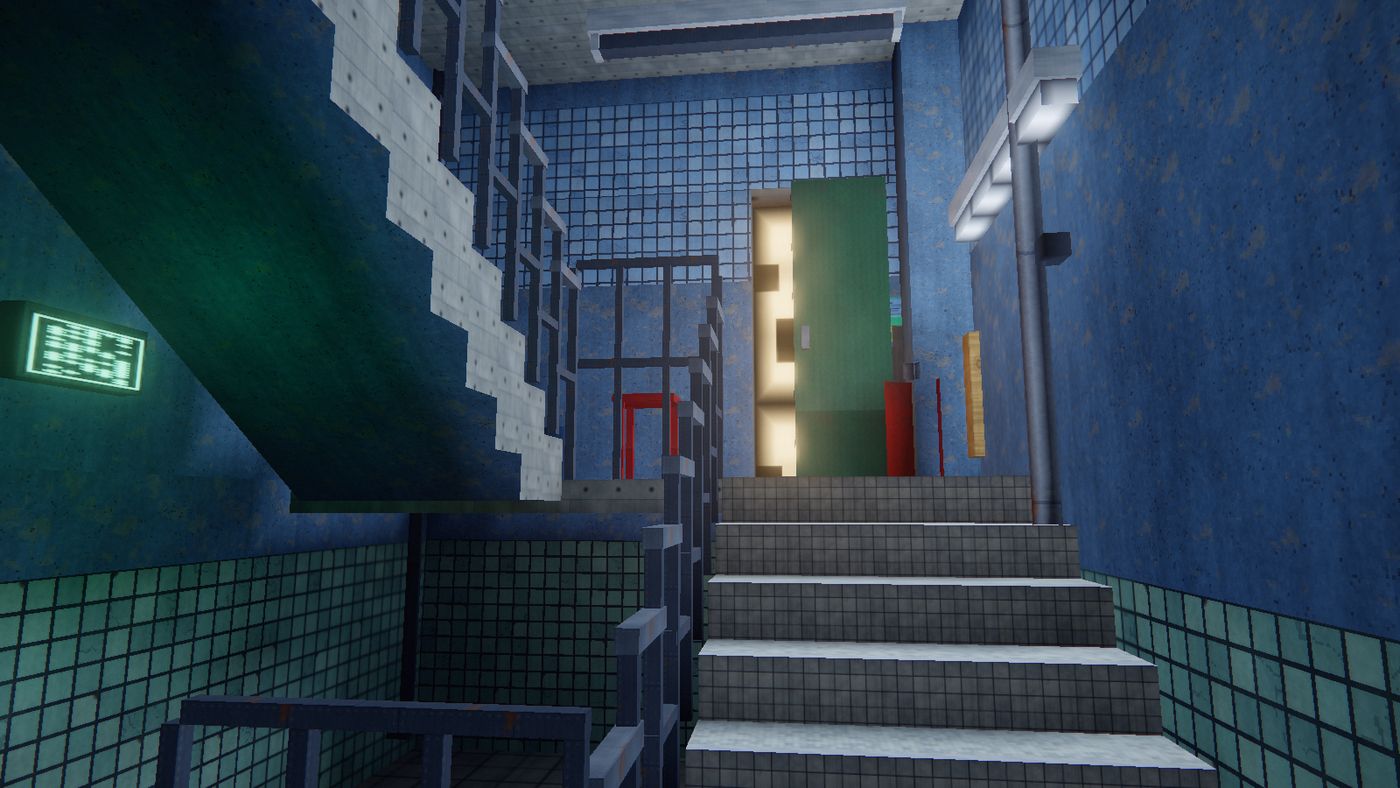
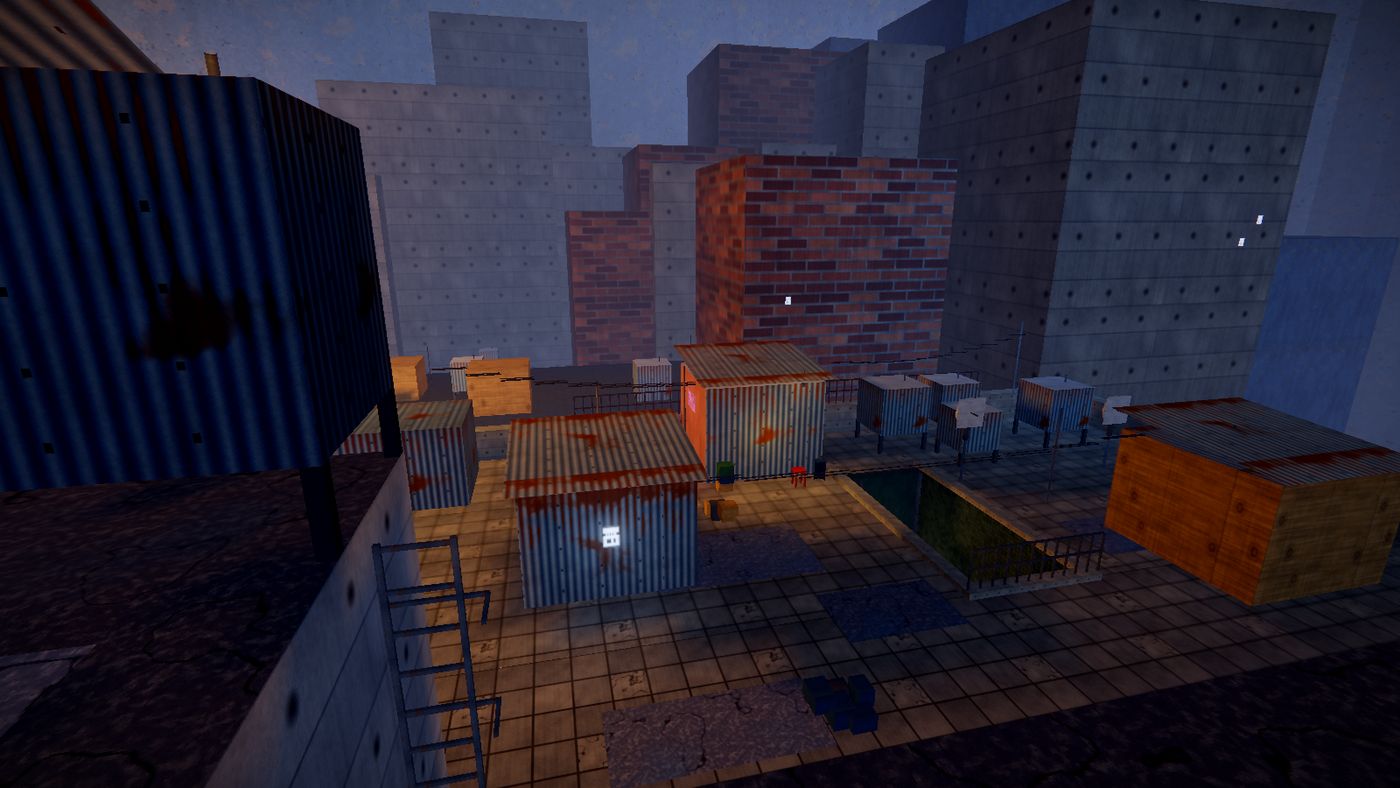
Why it stopped being voxels
The first version of this world was built from 60 mm voxels, and the verdict on it was that it looked like a bad Minecraft mod. That verdict was right, and the obvious fix — smaller voxels — was wrong. A voxel is a cube at every size, so halving one buys a finer grid of cubes, not a surface, at eight times the cost.
So the detail moved off the geometry and into the surface. A wall is now two triangles wearing a procedurally painted texture at 7.8 mm per texel, and the light is baked into it once, with real shadow rays, at build time. Nothing ships as an asset file: every texture in these ten scenes is generated in code when the page loads.
| Voxel build | Now | |
|---|---|---|
| Detail resolution | 60 mm voxel | 7.8 mm texel |
| One 12 m tenement facade | ~200,000 triangles | ~400 triangles |
| A whole scene | never got there | 9k – 60k triangles |
| Draw calls per scene | hundreds | 9 – 30 |
| Lighting | per-vertex AO, no shadows | baked, ray-traced shadows |
| Cost per frame to light | zero | zero |
| Asset files shipped | none | none |
Detail went up roughly eight-fold and the cost went down, which is the only reason any of this runs on a phone.
What these are, and are not
They are authored rooms, not generated levels — composed the way key art is composed, to show what the engine can hold. A floor is still generated, not composed.
Eleven of them now turn up inside a run. The generator reserves a rectangle, stamps the room in, and routes a corridor to a door the room already had — the collision grid for each is rasterised straight out of its own geometry, so none of them had to be redrawn to become a place you can walk into. They are dealt from a shuffled bag seeded off the run code, so no room is ever met twice in one playthrough and no two runs meet them in the same order. Across 40 runs and 800 floors: 440 placed, zero repeats, zero unreachable exits. You can also walk all twenty on their own, from ROOMS on the title screen.
What it does share now is the pipeline. The same painted materials and the same shadowed light bake build the game's own floors, which is new — an earlier version of this page had to admit the demo looked nothing like these pictures. On a Galaxy S22 a generated floor runs 157,000 triangles across 77 draw calls, holds 60 fps with no adaptive downscaling, and builds in 60–143 ms. The one cost is the first run of a session, which spends about two seconds painting the material palette.