The walls are the clock
They close for the whole run, and they speed up the longer you last. A merge is the only thing that pushes them back.
Drop & merge puzzle · iPhone
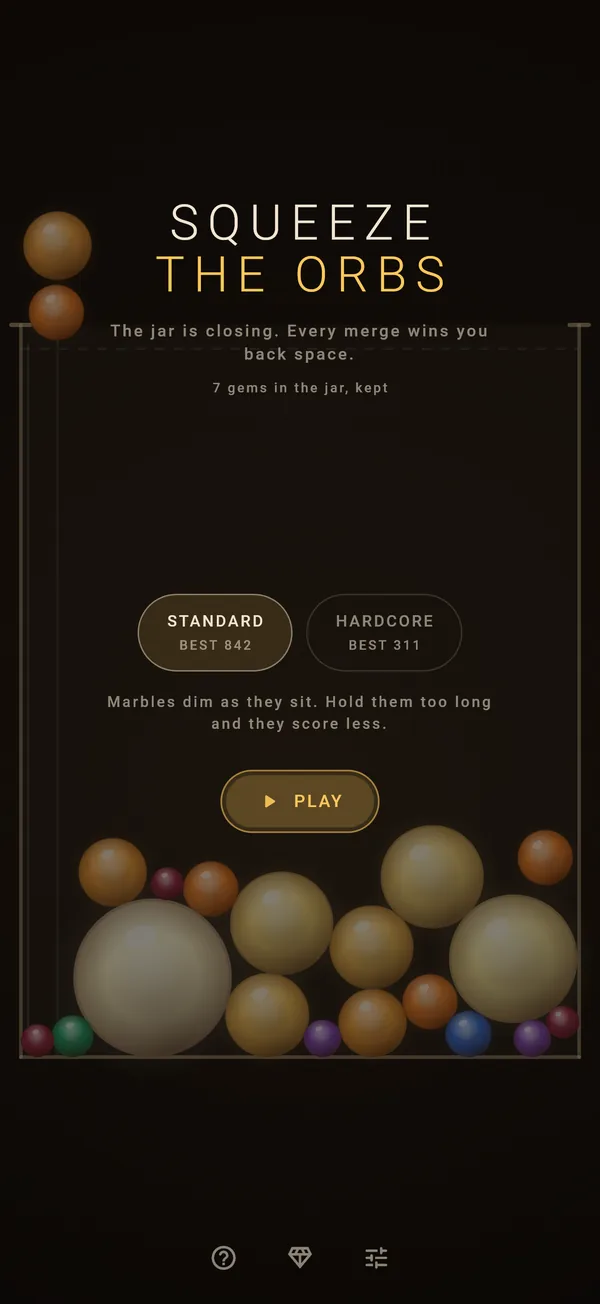
The jar is closing. Every merge wins you back space.
0points
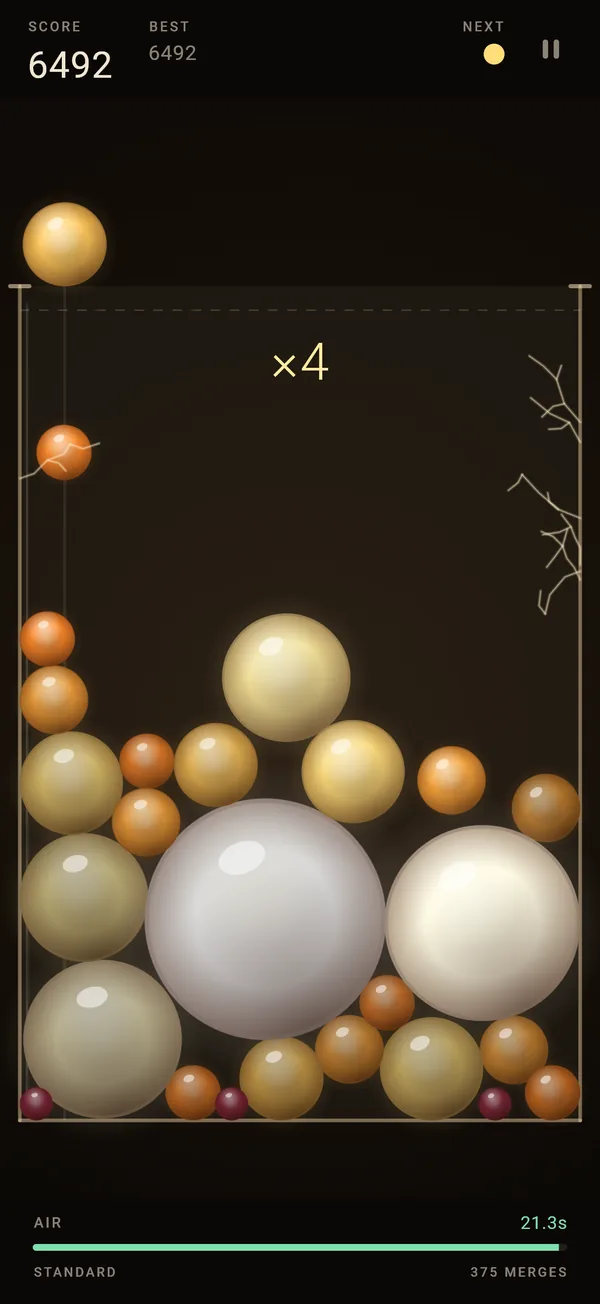
Drop glowing orbs into a glass jar. Two of a kind touch and become the next one up. Meanwhile the walls are creeping inward, and they never stop. Every merge shoves them back out, and the bigger the merge, the more air you buy.
There is no line to stay under. There is only the next merge, and how long you can keep paying for room.
 Free · no ads · no purchases
How it plays
One real run, start to spill. Scroll to play it.
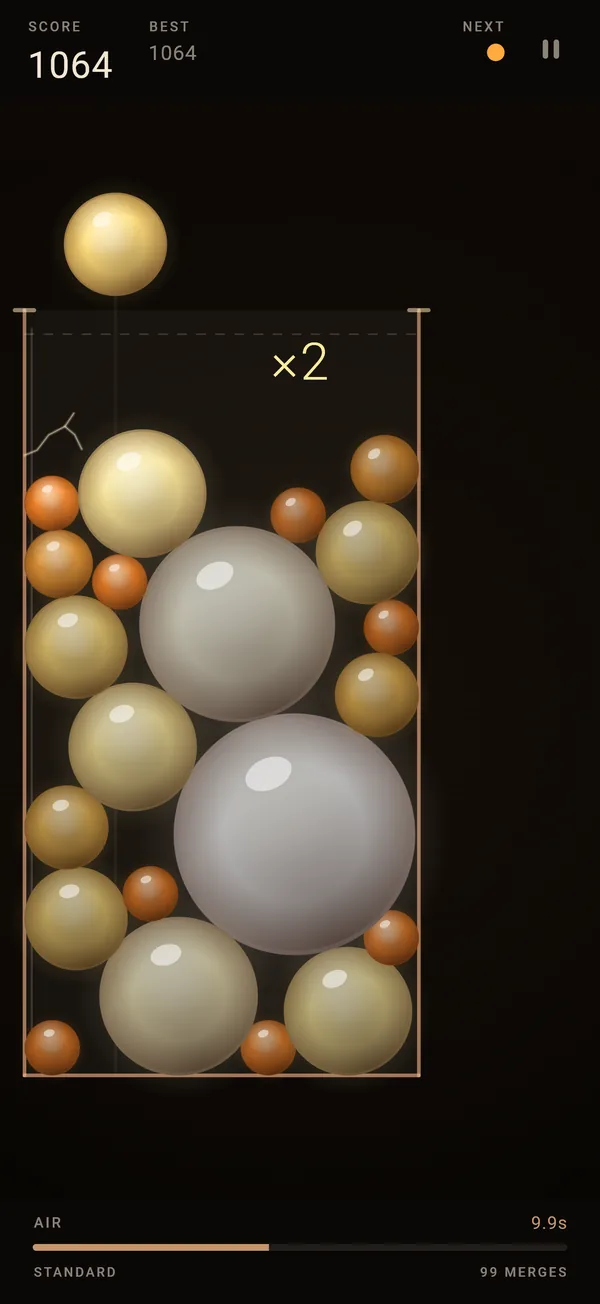
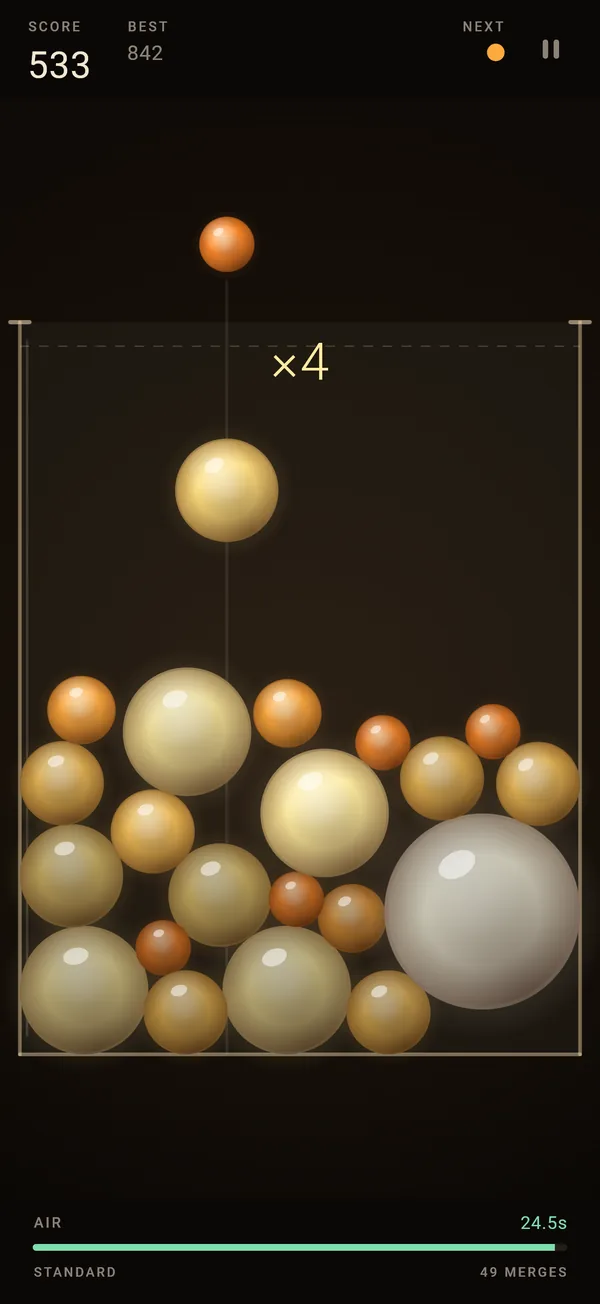
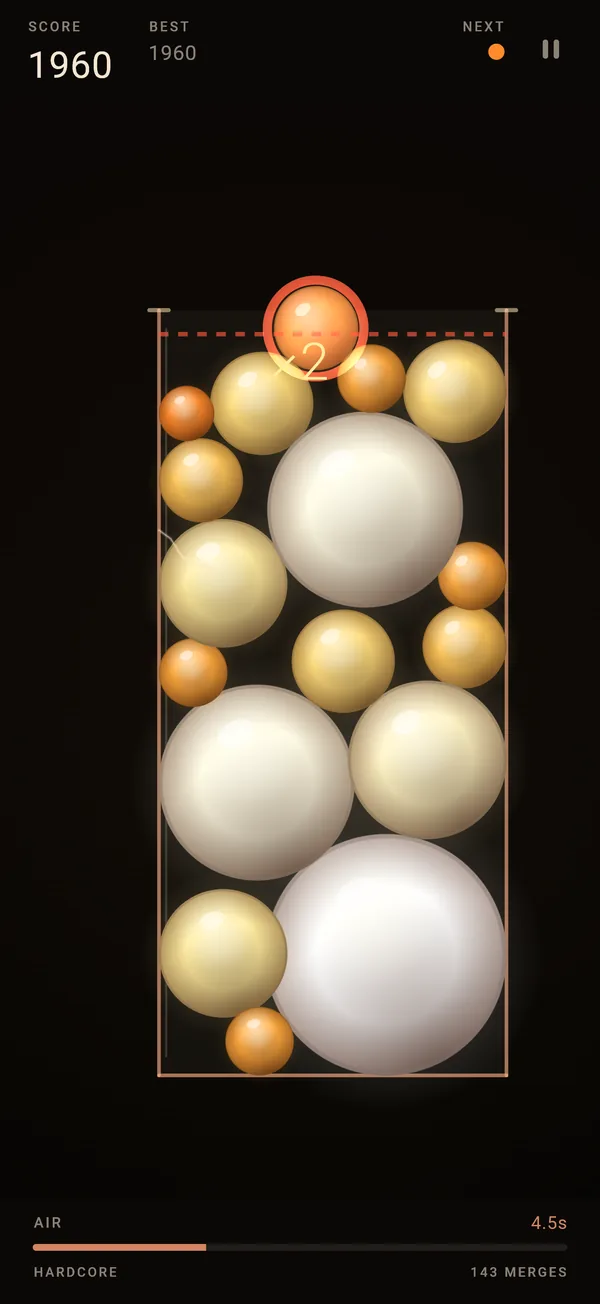
Aim with your thumb and lift it to drop. The orbs are glass: they bounce, roll off each other and settle like real marbles.
From the first second, both walls creep inward. The AIR meter is how long you have until they meet, if you never merged again.
Two of the same kind touch and become the next one up, and the walls are shoved back out. A merge feeds the wall it happened next to, so starve one side and the jar closes lopsided.
Merges that land in quick succession compound, and each link in the chain buys more air than the last.
The eighth and biggest orb is the Lantern. Making one fractures the jar, and the jar grows taller for it.
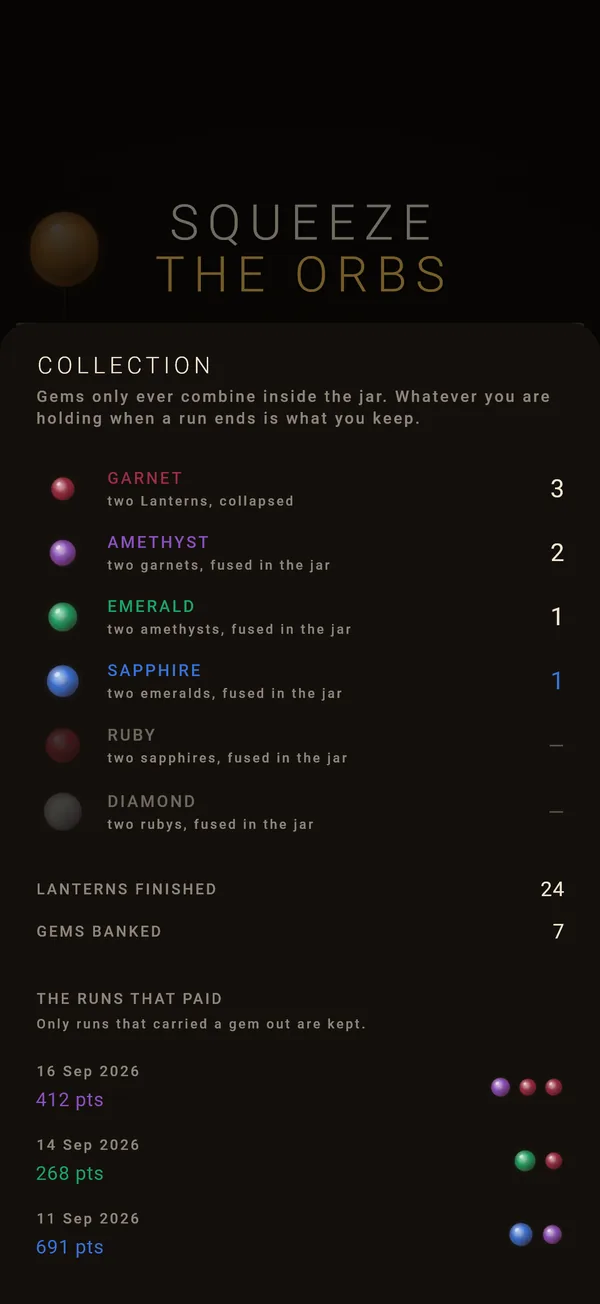
When two Lanterns meet they collapse into a small, dense gem that sinks through the pile. Gems fuse only with their own kind, and whatever you are holding at the end is yours to keep.
The squeeze pushes your pile upward until something comes to rest above the rim. That is the end of the run: no line was crossed, the jar simply ran out of room.
The ladder
Two of a kind make the next one up, and every step up is a bigger orb, a bigger refund of air, and more points. Press one to hear it: its note is worked out from its size, so the Spark rings high and the Lantern rings low.
Two Lanterns collapse into a garnet. Two garnets fuse into an amethyst, right there in the jar, for the biggest gasp of air in the game. Nothing carries over between runs, so a diamond is not a grind. It is a story.
What you are still holding when the run ends goes on the shelf in your Collection, and the title screen’s jar shows off every gem you have ever banked.
The rules that matter
They close for the whole run, and they speed up the longer you last. A merge is the only thing that pushes them back.
A merge mostly feeds the wall it happened beside. Merge on one side only and the jar closes lopsided around you.
No losing line is drawn across the jar. The squeeze lifts your pile until a piece rests above the rim. Never merge, and the walls meet in the middle instead.
An orb left unmerged slowly goes out, and a dim orb refunds less air and scores less. Nursing a big chain is a gamble, not a free option.
One merge often knocks the next pair together. Merges that land close together compound, so a cascade buys back far more air than the same merges one at a time.
Standard dims your orbs. Hardcore never does, but its clock runs faster, its jar starts narrower, and a spill comes sooner. Same jar, meaner timer.
Made of nothing
Every pixel in the game is drawn and every sound is computed while you play. Each impact is synthesised from the collision that caused it: the pitch comes from the size of the orbs, how long it rings depends on how buried in the pile they are, and no two hits are quite alike.
A loose Spark gives a bright, glassy tick. A Lantern rings lower and longer, unless it lands on a packed pile, which damps it to a short, heavy knock. The jar answers too, and as the walls close in its voice tightens, so what you hear late in a run is the squeeze itself.
The jar at the top of the page, computed collision by collision, the same way.
On your phone
What you get
No account. No ads. No purchases. It never asks for a permission. The app reports anonymous play statistics, which you can switch off in Settings, and your scores and gem collection stay on your phone. The privacy policy is the long version.
Questions
How long can you keep buying air?
Free on iPhone · Support · support@bendigogames.com