Does Earth rise and set when you are on the Moon?
It does not — except at the very edge of the near side, where libration carries it under the horizon and back once a month. Computed: the exact size of the wobble at Mare Humboldtianum, and at Tranquility Base for comparison.
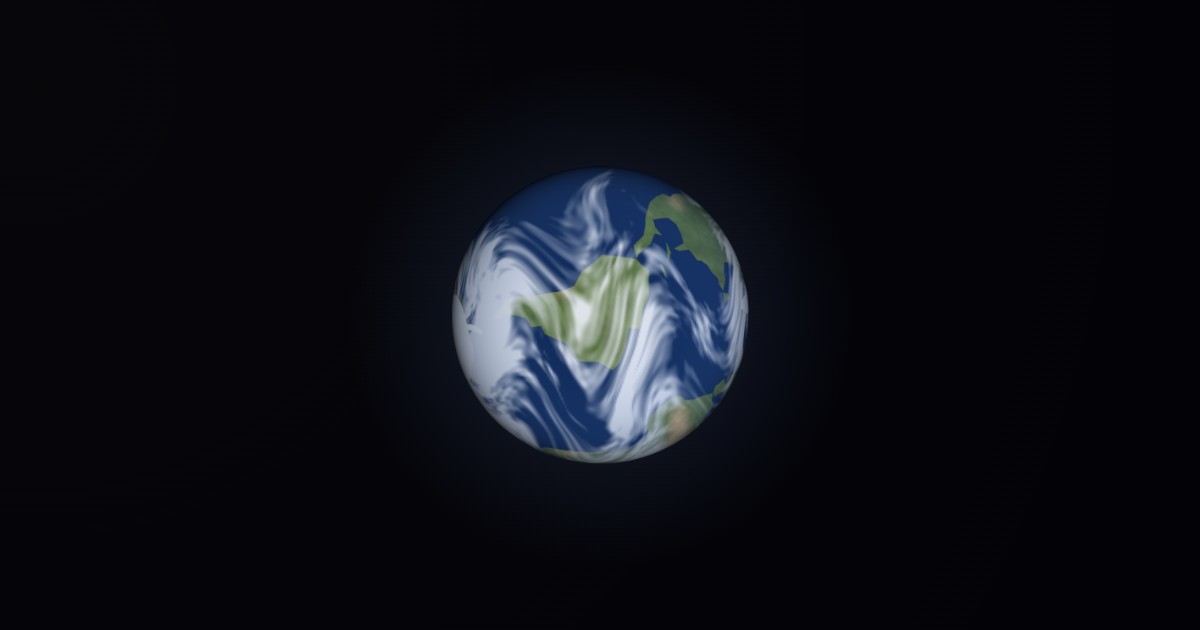 Open this exact moment — and move the clock yourself
Live Rendered here and now by the Lunar Aspect engine, not a screenshot. Download free on the App Store
No — with one exception, and you are looking at it. Earth hangs in essentially one place and stays there: at Tranquility Base it drifts a total of 11.92° in a month and never comes close to the horizon. But this page is computed for Mare Humboldtianum, out on the north-eastern edge of the near side, where Earth sits only 12.0° above the horizon — and there the drift is enough to carry it under the horizon and back, once a month, for as long as the Moon has been where it is.
Why it is stuck
The Moon turns once on its axis in exactly the time it takes to go once around Earth. That is not a coincidence; tides locked it there over billions of years. The consequence is that one lunar face is permanently turned toward us, and from that face Earth is permanently in the same patch of sky. Where you stand decides where Earth sits, and then it simply stays.
But it does wobble, and you can measure it
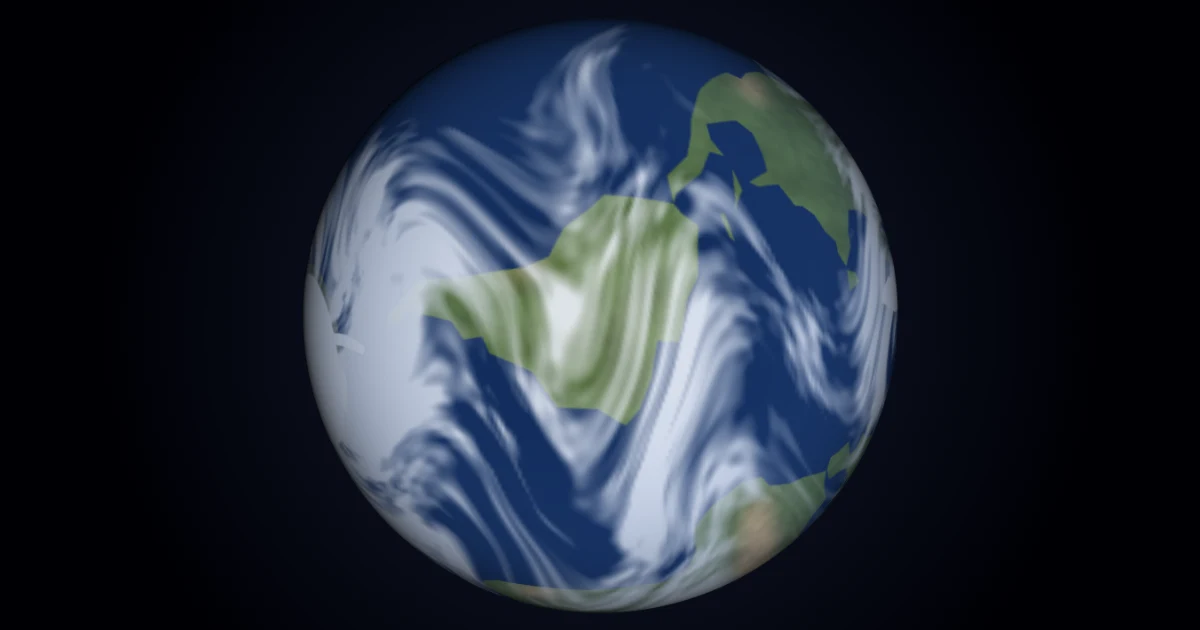
The lock is not perfect. The Moon’s orbit is elliptical and its axis is tilted, so it rocks slightly as it goes round — libration. Over one month the engine has Earth drifting 15.0° above the horizon up and down and 9.72° side to side from this site: from 12.0° above the horizon at its highest down to 2.9° below the horizon, which is under the horizon.
That is a real motion, and it is small: Earth itself is 1.85° wide, so the whole month’s wander is a handful of Earth-widths. It only amounts to a rising and a setting here because here there is a horizon in the way. At this instant the point on the Moon directly beneath Earth — the centre of the wobble — is at 6.39°, 4.12° in lunar coordinates.
Which is the honest shape of the answer: Earth does not rise on the Moon, the way the Sun does on Earth, because nothing is turning to make it. What happens at the very edge of the near side is a planet rocking a few degrees either side of a fixed point that happens to sit almost exactly on the skyline.
Libration is also why we on Earth can see slightly more than half the lunar surface over time: the Moon rocks, and we get a peek round each edge.
How these numbers were produced
Every figure on this page came out of the ephemeris that runs inside Lunar Aspect, computed for Mare Humboldtianum at 2026-10-12 15:00 UTC. Nothing here was typed in by hand: the page is generated, and a number that the engine stops producing breaks the build rather than going quietly stale.
| Value | Produced by |
|---|---|
| 12.0° above the horizon | compute().earth.alt |
| 15.0° above the horizon | earth.alt over 30 days, max − min |
| 9.72° | earth.az over 30 days, max − min |
| 1.85° | compute().earth.angRad × 2 |
| 6.39° | compute().subEarth.lat |
| 4.12° | compute().subEarth.lon |
| 12.0° above the horizon | highest earth.alt over 30 days of samples |
| 2.9° below the horizon | lowest earth.alt over 30 days of samples |
| 11.92° | the same 30-day scan run at Tranquility Base |
Engine build 596b875 2026-09-23 ·
page generated 2026-09-23 ·
positions are apparent, referred to the observing site rather than to the
Moon’s centre.
Move the date yourself
This page is one frozen moment. The engine that computed it runs on a phone, at any date, from anywhere on the Moon — the eclipses, the planets, the comets and Earth’s phase, all of it computed rather than canned.