How big does Earth look from the Moon?
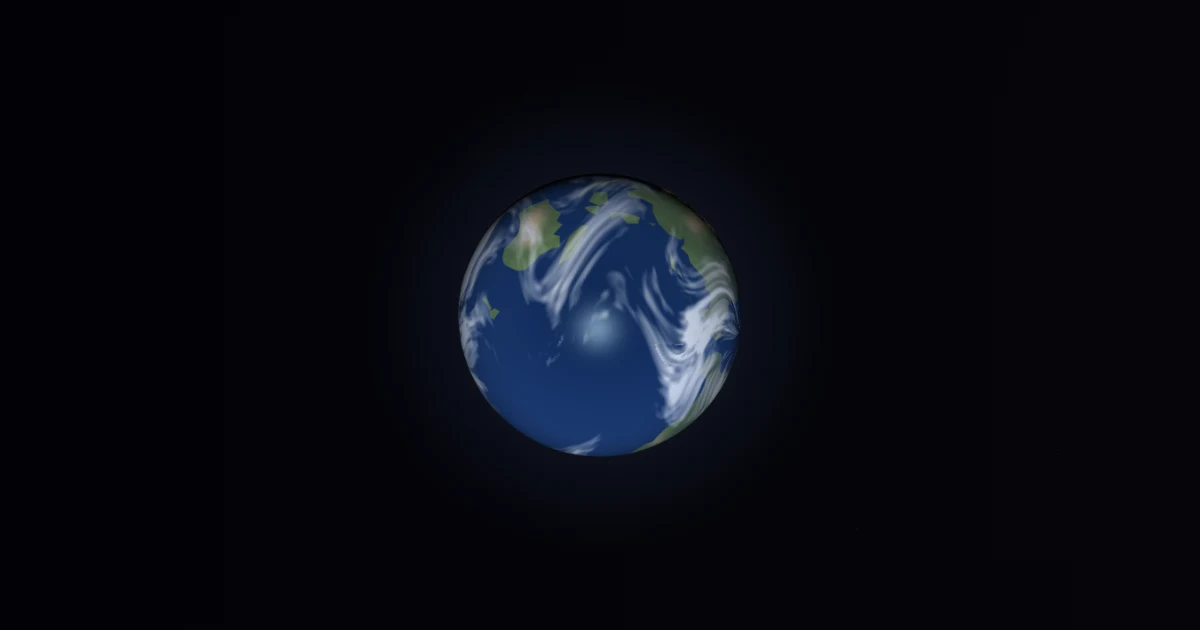
About four times wider than the Sun, and not always the same — the Moon’s orbit is an ellipse. Computed: Earth at its nearest and its farthest within one year.
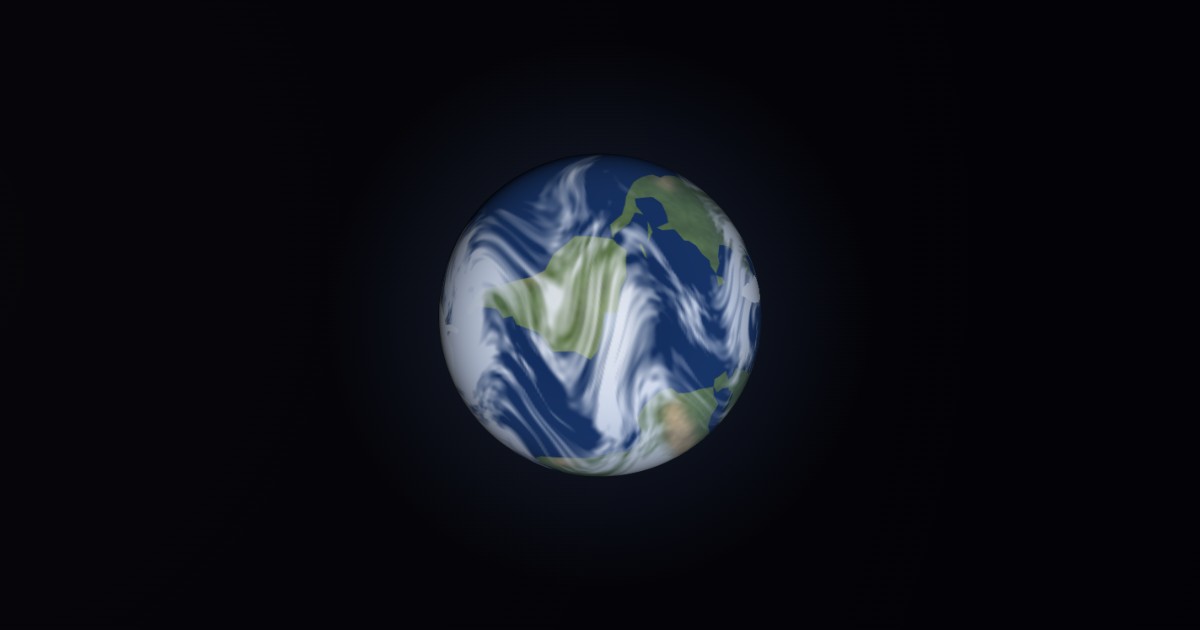 Open this exact moment — and move the clock yourself
Live Rendered here and now by the Lunar Aspect engine, not a screenshot. Download free on the App Store
Earth spans about 2.06° of sky from the Moon, against the Sun’s 0.53°. That makes it roughly 3.9× the Sun’s width — and something like thirteen times the width of the Moon as we see it from a back garden.
Hold your thumb out at arm’s length. That covers the Moon from here with room to spare. It would not cover Earth from there.
It is not always the same size
The Moon’s orbit is an ellipse, not a circle, so the distance changes through the month. Within one year of samples the engine finds Earth as large as 2.06° at 355308 km away, and as small as 1.80° at 405088 km.
That is a swing of 14.01% between nearest and farthest — the two figures on this page are rendered at an identical field of view so you can put them side by side. It is the same effect that gives Earth its supermoons, seen from the other end.
Why it looks bigger than it should
Photographs from the Apollo missions often disappoint people: Earth looks small. That is a lens problem, not an astronomy problem. A camera flattens a wide field onto a small rectangle. 2.06° is genuinely large — about four Sun-widths of sky — and standing there, the thing that would strike you is not its size but that it never moves.
How these numbers were produced
Every figure on this page came out of the ephemeris that runs inside Lunar Aspect, computed for Tranquility Base at 2028-09-18 15:00 UTC. Nothing here was typed in by hand: the page is generated, and a number that the engine stops producing breaks the build rather than going quietly stale.
| Value | Produced by |
|---|---|
| 2.06° | compute().earth.angRad × 2 |
| 0.53° | compute().sun.angRad × 2 |
| 3.9× | ratio of the two above |
| 2.06° | largest earth.angRad in a year of samples |
| 1.80° | smallest earth.angRad in a year of samples |
| 355308 km | compute().earth.dist at that instant |
| 405088 km | compute().earth.dist at that instant |
| 14.01% | nearest ÷ farthest angular diameter |
Engine build 84048b2 2026-09-20 ·
page generated 2026-09-19 ·
positions are apparent, referred to the observing site rather than to the
Moon’s centre.
Move the date yourself
This page is one frozen moment. The engine that computed it runs on a phone, at any date, from anywhere on the Moon — the eclipses, the planets, the comets and Earth’s phase, all of it computed rather than canned.