How long is a day on the Moon?
About 29 and a half Earth days from sunrise to sunrise, with roughly a fortnight of continuous daylight in the middle. Computed from one real sunrise at Tranquility Base.
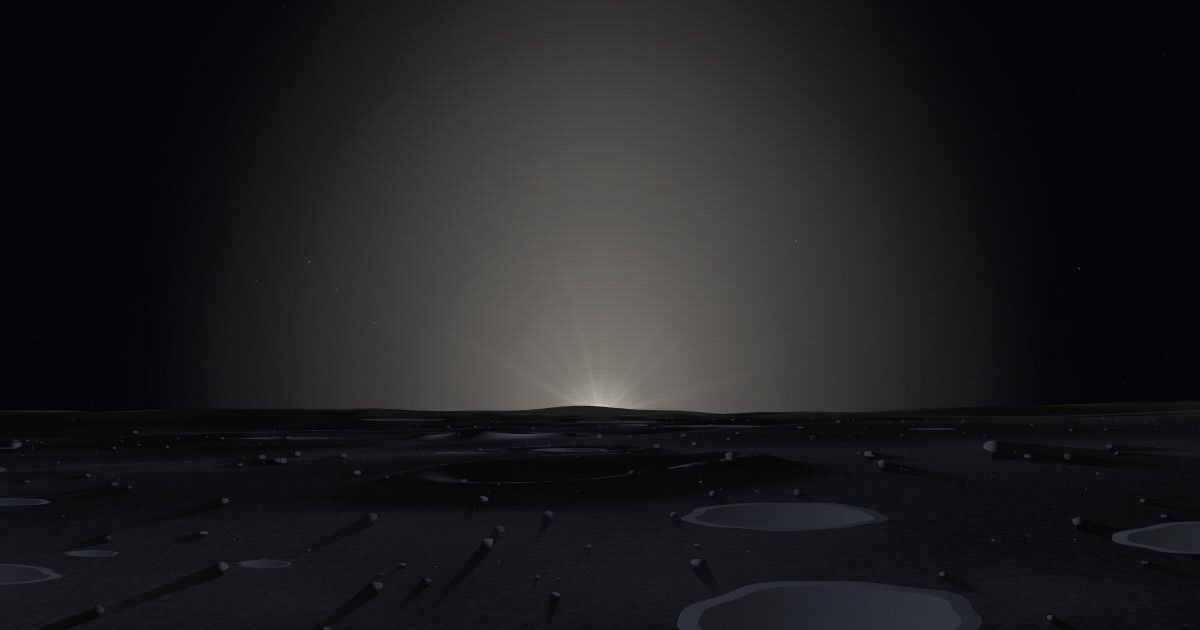 Open this exact moment — and move the clock yourself
Live Rendered here and now by the Lunar Aspect engine, not a screenshot. Download free on the App Store
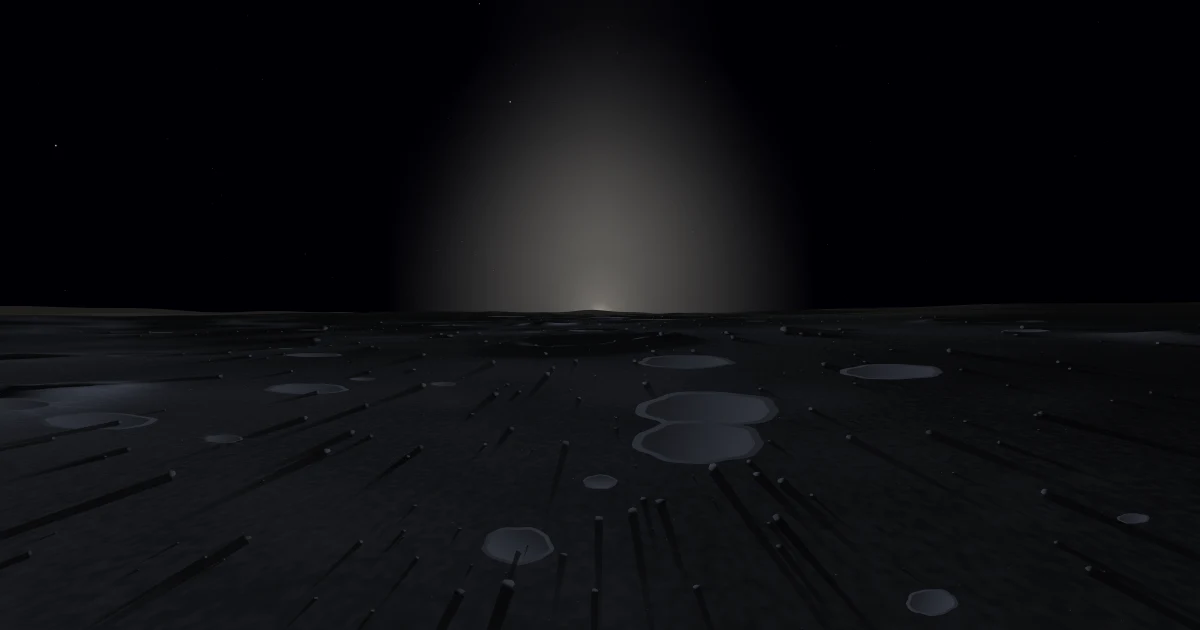 Open this exact moment — and move the clock yourself
One full day at Tranquility Base — sunrise to the next sunrise — runs 29.6 Earth days. About 14.8 of that is unbroken daylight, and about 14.8 is unbroken night.
A fortnight of noon, then a fortnight of dark
The Moon turns on its axis once a month rather than once a day, so everything that we experience in hours happens there in weeks. There is no morning coffee and no evening; there is a two-week afternoon, and then a two-week night with no artificial light anywhere on the surface.
This is the constraint that shapes every plan for staying there. Solar power works beautifully for a fortnight and then stops for a fortnight, and surface temperature swings by hundreds of degrees across that boundary. It is also why the lunar poles matter so much: near them the Sun grazes the horizon almost continuously instead of setting for two weeks.
Sunrise takes about an hour, and nothing announces it
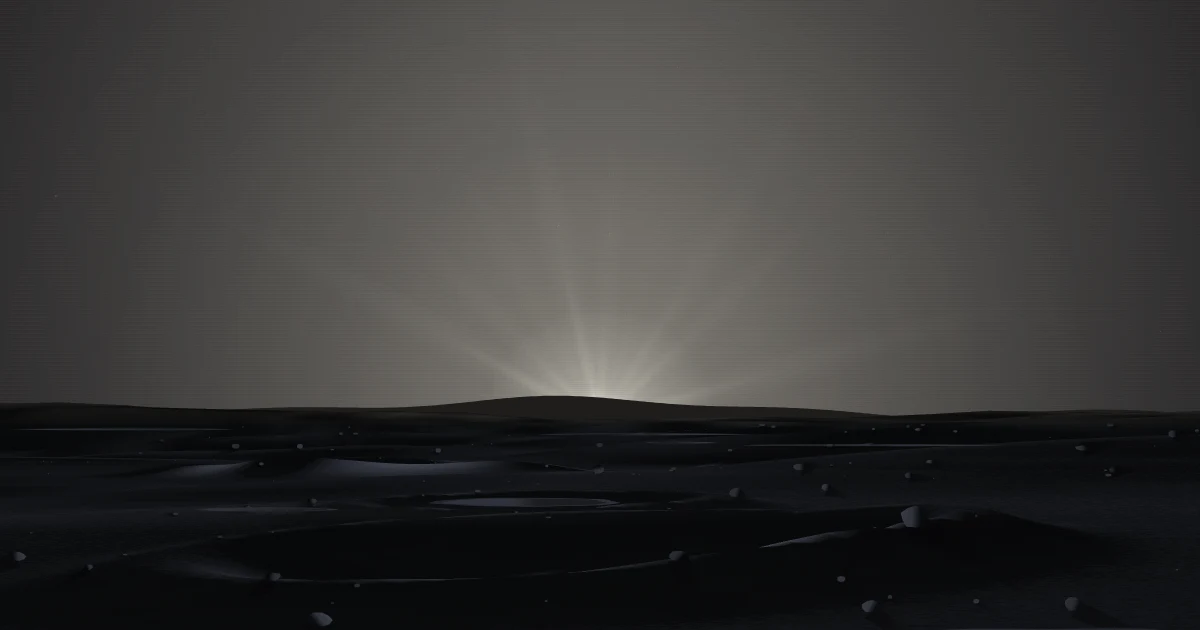
The Sun is 0.54° wide, and from this site it needs 64 minutes just to lift clear of its own diameter. On Earth that whole process takes a couple of minutes.
And nothing precedes it. There is no dawn, no brightening sky, no colour — those are all atmosphere, and there is none. The sky stays black, and the first thing that happens is that a hilltop lights up. Earth, meanwhile, is 69.93% lit and sitting exactly where it always is.
How these numbers were produced
Every figure on this page came out of the ephemeris that runs inside Lunar Aspect, computed for Tranquility Base at 2026-10-16 12:19 UTC. Nothing here was typed in by hand: the page is generated, and a number that the engine stops producing breaks the build rather than going quietly stale.
| Value | Produced by |
|---|---|
| 14.8 | nextEvent("sunset") − nextEvent("sunrise") |
| 29.6 | sunrise to the following sunrise |
| 14.8 | sunset to the following sunrise |
| 64 | scan for sun.alt ≥ its own angular diameter |
| 0.54° | compute().sun.angRad × 2 |
| 69.93% | compute().earth.illum |
Engine build 596b875 2026-09-23 ·
page generated 2026-09-23 ·
positions are apparent, referred to the observing site rather than to the
Moon’s centre.
Move the date yourself
This page is one frozen moment. The engine that computed it runs on a phone, at any date, from anywhere on the Moon — the eclipses, the planets, the comets and Earth’s phase, all of it computed rather than canned.