What does a solar eclipse look like from the Moon?
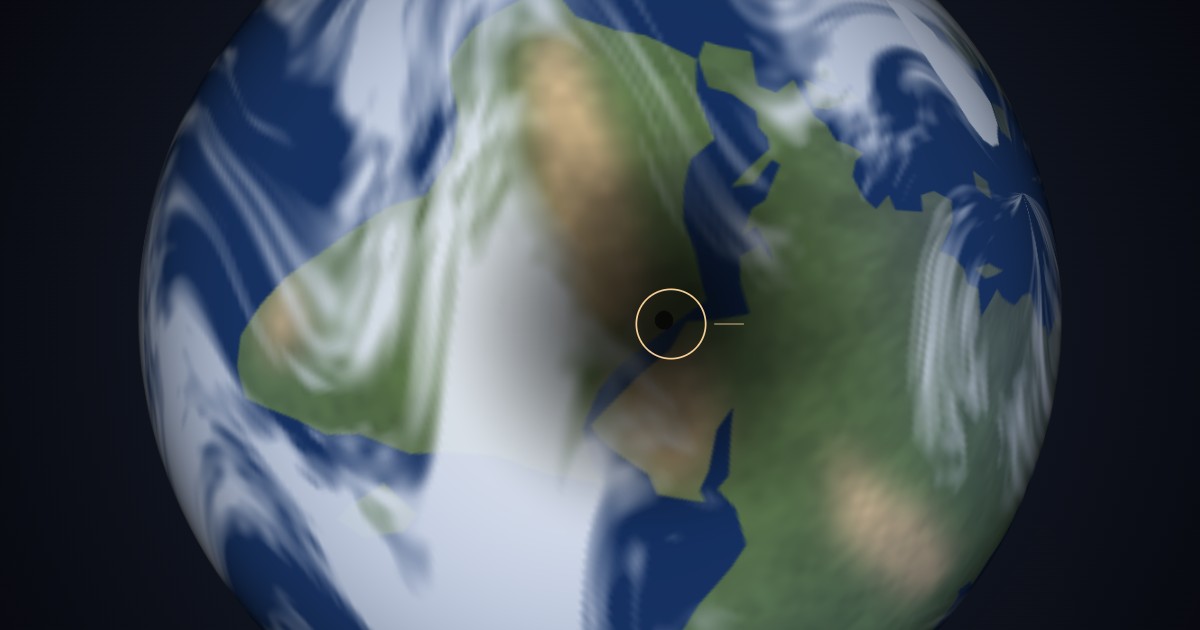
From the Moon you never see a solar eclipse — you watch its shadow. The 2 August 2027 eclipse, computed: a fully lit Earth overhead at lunar midnight, and a dark spot crossing Egypt.
 Open this exact moment — and move the clock yourself
Live Rendered here and now by the Lunar Aspect engine, not a screenshot. Download free on the App Store
You don’t. From the Moon there is nothing in front of the Sun — the Sun is simply up, or it isn’t. What you get instead is the other end of the event: the Moon’s own shadow, a small hard-edged dark spot, crawling across a fully lit Earth.
Take the total solar eclipse of 2 August 2027, the one that crosses Luxor. Standing at Tranquility Base at 2027-08-02 10:07 UTC, the engine puts that shadow at 25.37° N, 32.90° E — north-east Africa — with Earth itself 100% illuminated and 66.9° above the horizon.
Earth is full, and that is not a coincidence
It is forced. A solar eclipse happens when the Moon passes between Earth and the Sun — new Moon, as seen from Earth. From the Moon, that same geometry is full Earth. The Sun is behind you. The two moments are the same moment seen from opposite ends, and the engine agrees: the exact instant of full Earth falls 11 minutes from the eclipse.
The clock says it too. Local solar time at Tranquility Base is 01:32 of twenty-four, and the Sun sits 67.0° below the horizon. So the only time anyone can watch a solar eclipse cross Earth is in the middle of the lunar night, with a full Earth overhead. Every photograph you have ever seen of a total eclipse was taken from inside that moving dot.
How small it actually is
Earth hangs 2.05° wide from here — about 3.9× the width of the Sun’s 0.53°, which is why Earth dominates a lunar sky the way nothing dominates ours. Against that disc, the shadow is a fleck. The thing that darkens cities and stops traffic is, from one step away, a mark you have to be told how to find.
Where it goes
The spot does not sit still. Earth turns underneath it while the Moon moves along its orbit, and across three hours the engine walks it from the Atlantic to the Indian Ocean:
| From greatest | Latitude | Longitude |
|---|---|---|
| −90 min | 34.53° N | 16.59° W |
| −60 min | 34.81° N | 7.64° E |
| −30 min | 31.02° N | 22.18° E |
| greatest | 25.37° N | 32.90° E |
| +30 min | 18.34° N | 42.08° E |
| +60 min | 9.76° N | 51.83° E |
| +90 min | 1.91° S | 67.30° E |
That track is the page’s own check on itself. The published point of greatest eclipse for 2 August 2027 is near Luxor, and the computed position above lands within half a degree of it — which is the only reason to trust anything else here.
How these numbers were produced
Every figure on this page came out of the ephemeris that runs inside Lunar Aspect, computed for Tranquility Base at 2027-08-02 10:07 UTC. Nothing here was typed in by hand: the page is generated, and a number that the engine stops producing breaks the build rather than going quietly stale.
| Value | Produced by |
|---|---|
| 2.05° | compute().earth.angRad × 2 |
| 0.53° | compute().sun.angRad × 2 |
| 3.9× | ratio of the two above |
| 100% | compute().earth.illum |
| 66.9° above the horizon | compute().earth.alt |
| 67.0° below the horizon | compute().sun.alt |
| 01:32 | compute().localTime |
| 25.37° N | compute().earth.shadow.lat |
| 32.90° E | compute().earth.shadow.lon |
| 11 | nextEvent("fullearth") − the eclipse instant |
| 130 km | nominal constant, not computed — not quoted on this page |
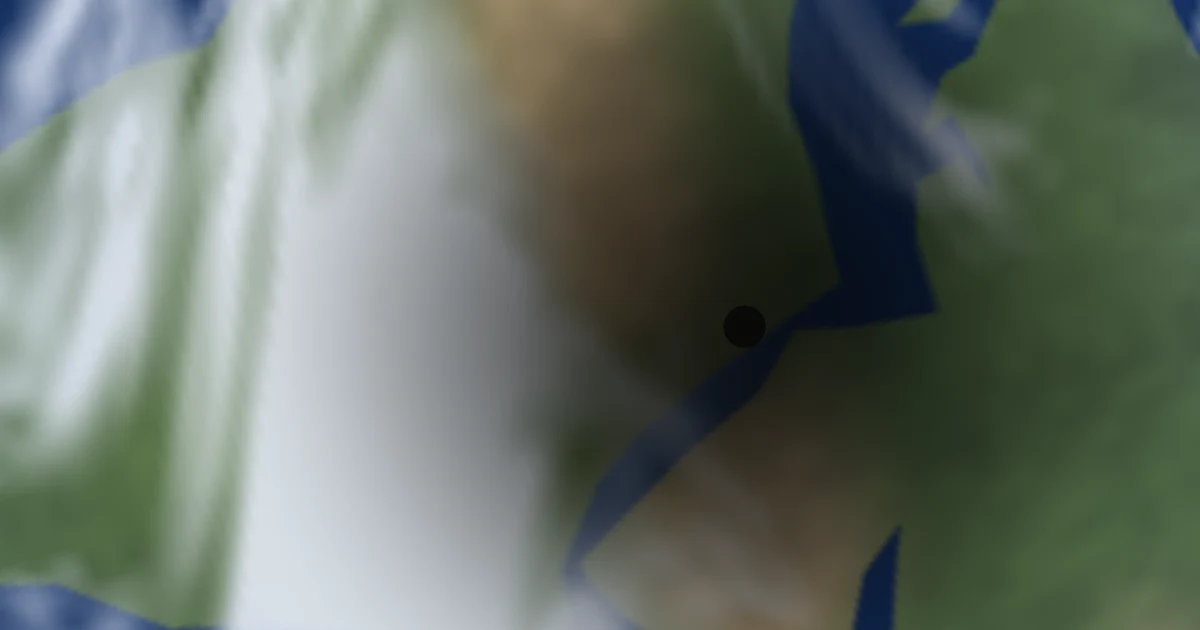
One mark on the first figure is not the engine’s: the ring. Its position is not drawn from a guess either — the engine is asked whether a shadow exists at this instant, and only if it says yes are the rendered pixels searched for where it landed. On a frame with no eclipse, no ring is drawn at all.
Engine build 84048b2 2026-09-20 ·
page generated 2026-09-19 ·
positions are apparent, referred to the observing site rather than to the
Moon’s centre.
Move the date yourself
This page is one frozen moment. The engine that computed it runs on a phone, at any date, from anywhere on the Moon — the eclipses, the planets, the comets and Earth’s phase, all of it computed rather than canned.